


A high-protein, low-carb eating pattern can make meals more filling by centering protein and choosing carbohydrate portions deliberately. You may consider it for weight management, blood sugar goals, or personal preference. Your needs can differ based on health, activity, appetite, and daily routine.
This approach can give you a simple way to plan satisfying meals without treating every carbohydrate as off-limits. It can also help you think more deliberately about how foods affect fullness and blood sugar. What works well depends on your preferences and health goals.
The guidance below offers practical ways to choose portions, build meals, and adjust a sample week. Use it as a starting point, not a strict formula. Treat the plan as a flexible starting point, not a substitute for advice tailored to your health history.
Key Takeaways
- Protein-centered meals can support fullness and help organize meal planning.
- Low-carb approaches vary, and zero carbohydrates are not required.
- Your protein and carbohydrate targets depend on personal needs.
- A practical meal plan can include varied proteins and vegetables.
- Clinical guidance can help tailor the approach to your health.
What Is a High Protein Low Carb Diet?

A high-protein, low-carb eating pattern raises protein while setting a deliberate limit on carbohydrate portions. Ketosis is a metabolic state in which the body uses ketones for fuel when carbohydrate availability is very low. The pattern does not automatically require eliminating carbohydrates.
There is no single universal ratio for a high-protein, low-carb pattern. Definitions of a low-carb diet depend on the context and the approach being discussed. A 2025 review defined low carbohydrate as no more than 130 grams daily or 25% of calories.
The same review described a ketogenic diet as 20-50 grams of carbohydrates daily or less than 10% of calories. A 2025 meta-analysis used different categories: ketogenic diets provided no more than 10% of calories from carbohydrates, low-carb diets 10%-26%, and moderate-carb diets 26%-45%.
These ranges show why the label “low carb” can mean different things in practice. A less restrictive diet may reduce portions of some carbohydrate foods while still including fruit, beans, or grains. A very-low-carb ketogenic pattern limits carbohydrate much more sharply.
When carbohydrate availability becomes very low, the body can make and use ketones for fuel. That process is ketosis, and it is not a requirement for every low-carb approach. A person may choose a lower-carbohydrate pattern without trying to reach ketosis.
Think of the term as a broad description rather than a precise prescription. Food choices and portions determine how restrictive a particular diet becomes. Keep in mind that low carb describes a range of approaches, not a requirement to eat zero carbohydrates.
How Much Protein and How Many Carbs Should You Aim For?
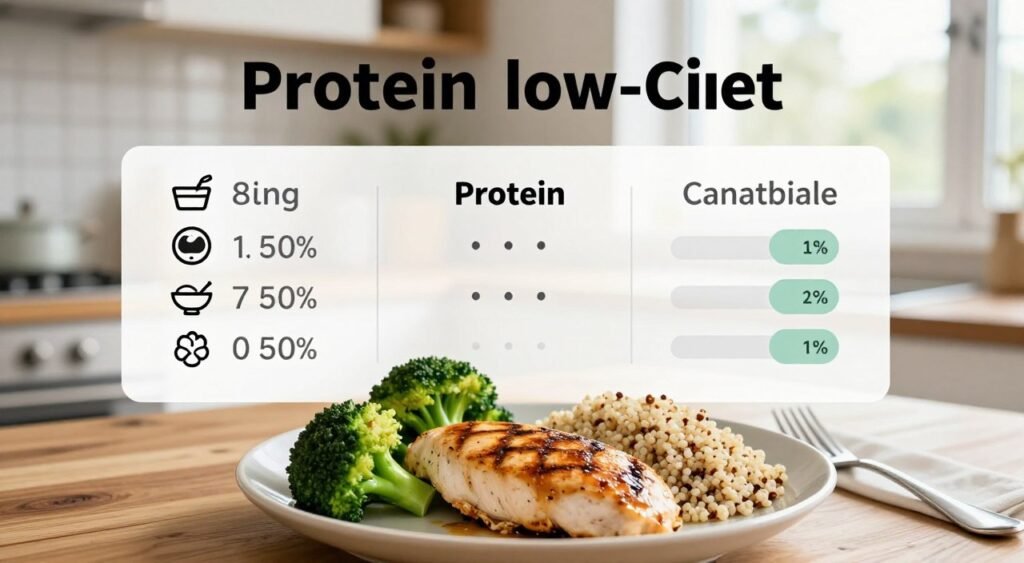
The protein RDA is a useful baseline, while a higher target depends on your body, activity, and health needs. RDA means Recommended Dietary Allowance. The protein RDA is 0.8 grams per kilogram of body weight, or 0.36 grams per pound.
There is no standardized definition of a high-protein diet. The American Heart Association recommends 10%-35% of calories from protein, or about 46 grams daily for adult women and 56 grams for adult men. These references are not personal prescriptions.
For example, a 150-pound person eating 2 grams of protein per kilogram of body weight gets about 136 grams daily. That amount is higher than the RDA. Body size, activity, health status, and goals all affect an appropriate protein intake.
A 2,000-calorie high-protein, low-carb example can help show how one pattern divides its calories. It is a reference, not a universal target for your diet.
| Pattern | Protein | Carbohydrates | Fat |
|---|---|---|---|
| 2,000-calorie example | 170 g (34%) | 130 g (26%) | 89 g (40%) |
The example combines substantial protein with a moderate carbohydrate share. Your own intake may differ with calorie needs, food preferences, and medical guidance. A single percentage cannot account for every person’s daily energy use or health needs.
Use the RDA as a general baseline rather than a personalized goal, especially if your training demands or health needs are unusual. Ask a registered dietitian or clinician to personalize targets if you have a medical condition or a specific training goal.
What Benefits Does Research Support?

The evidence supports modest improvements in several measured outcomes, alongside a small average increase in LDL and total cholesterol. Modest changes can matter, but they do not promise a particular result for you. Low-carb diets are not proven to prevent or cure disease.
A 2025 meta-analysis of 174 randomized trials involving 11,481 adults found triglycerides fell by 15.11 mg/dL. Systolic blood pressure fell by 2.05 mmHg, and diastolic pressure fell by 1.26 mmHg. HDL, often called “good” cholesterol, rose by 2.92 mg/dL.
The analysis also found LDL rose by 4.81 mg/dL and total cholesterol by 4.32 mg/dL. Body-composition markers improved across the measures assessed. Ketogenic diets led to greater weight loss than other carbohydrate-restricted patterns, along with greater LDL and total-cholesterol increases.
Low-carb diets produced more weight loss than moderate-carbohydrate diets in the analysis. Replacing carbohydrates with a combination of fat and protein showed the broadest improvements across measured outcomes. Results were most pronounced in females and people with overweight or obesity.
Longer interventions amplified effects on lipid ratios and inflammatory markers. The findings describe average changes across trials, not a guarantee that an individual will see the same effects. They also do not establish that every low-carb version has the same balance of benefits and trade-offs.
Protein may increase fullness and help preserve muscle mass during weight loss, particularly when meals include enough energy and resistance activity. Blood sugar responses depend on the foods you eat and your individual health. The high-protein, low-carb diet benefits are potential changes in measured outcomes, not a promise of disease prevention.
Consider both favorable and unfavorable changes when deciding whether the approach suits your priorities. Use these findings as context for your own goals, not as a guarantee of an individual result.
Which Foods Belong on the Food List?

Start your plate with a protein you enjoy, then add non-starchy vegetables and a satisfying source of fat. Variety helps keep meals appealing and supports a wider mix of nutrients. A high-protein, low-carb diet food list can include animal and plant options.
Animal proteins include chicken and other poultry, as well as lean cuts of meat. Seafood adds options such as shrimp and salmon. Eggs and dairy, including plain Greek yogurt and cottage cheese, can also supply protein.
For plant proteins, try firm tofu, nuts, and seeds. Non-starchy vegetables can fill out meals with color and texture. Broccoli, spinach, kale, cauliflower, zucchini, and cucumbers pair well with many proteins.
Avocado and olive oil can add satisfying fats to a meal. The amounts in the table are practical examples, not exact values for every product or preparation. Check the package or food entry when a precise count matters.
| Food | Serving | Protein | Carbohydrates |
|---|---|---|---|
| Chicken breast | 3 oz | 24 g | 0 g |
| Large egg | 1 egg | 6 g | Less than 1 g |
| Shrimp | 3 oz | 17 g | 0 g |
| Firm tofu | Quarter block | 14 g | 2 g |
| Salmon | 3 oz | 20-25 g | Not specified |
These protein sources can work in meals as different as a tofu-and-vegetable stir-fry or salmon with roasted broccoli. Greek yogurt can anchor breakfast or a snack, while eggs can fit into a quick lunch. Choose mostly minimally processed options so sauces and coatings do not quietly add carbohydrates.
Which Carbs and Other Foods Should You Limit?
The most useful first cuts are often sugary drinks and refined snacks, not every food that contains carbohydrates. Targeted changes can make portions easier to manage without removing entire food groups. Keep nutrient-rich foods that fit your chosen carbohydrate target.
- Sugary drinks and sweets, which can add sugar without much fiber.
- Refined grains such as white bread and pasta, especially when portions are large.
- Heavily processed snacks, which can make portions easy to overlook.
- Starchy foods when their portions exceed your carbohydrate target.
These categories are places to review, not a list of foods everyone must ban. Fruit, beans, lentils, and whole grains can still fit in portions suited to your approach. The right serving depends on your target and the rest of the meal.
Removing whole food groups can make it harder to get enough fiber and micronutrients. This matters because fiber supports digestion and is found in many plant foods. A varied pattern often gives you more ways to meet nutrition needs.
The FDA Nutrition Facts label lists total carbohydrate, dietary fiber, and added sugars. Its Daily Value for dietary fiber is 28 grams. The label can help you compare products and see how a serving fits your daily choices.
For blood sugar goals, the overall meal and your own response matter, not just one ingredient. Keep fiber-rich vegetables, nuts, seeds, or other suitable high-fiber foods in the routine as portions are adjusted.
How Do Keto and Atkins Plans Differ?
Keto is the most restrictive option here, while Atkins uses staged net-carbohydrate limits. Net carbohydrates means the carbohydrate amount after subtracting fiber. Atkins raises its net-carbohydrate allowance in later phases.
A ketogenic example gets most calories from fat and limits carbohydrate sharply. One 2,000-calorie example provides 70%-80% of calories from fat, 5%-10% from carbohydrates, and 10%-20% from protein. One version supplies 165 grams of fat, 40 grams of carbohydrates, and 75 grams of protein.
Atkins is a phase-based plan with different daily net-carbohydrate allowances. Atkins 20 starts with an induction phase allowing 20 grams daily. Atkins 40 is based on 40 grams daily, while later Atkins phases permit more.
| Plan | Daily carbohydrate limit | What to expect |
|---|---|---|
| Atkins 20 | 20 g net carbohydrates in induction | Fruit, bread, grains, starchy vegetables, most dairy, and alcohol excluded except cheese and butter |
| Atkins 40 | 40 g net carbohydrates | More daily net carbohydrates than Atkins 20 induction |
| Ketogenic example | 5%-10% of calories | Most calories come from fat |
Atkins later phases increase the allowance: balancing permits 25-50 grams net carbohydrates daily, individualizing allows 50-80 grams, and lifetime maintenance allows 80-100 grams. These are distinct stages rather than one fixed limit for the full plan.
Atkins, Paleo, and South Beach are named approaches with different rules and food choices. They are not interchangeable labels for the same high-protein diet. A flexible low-carb pattern can be less structured than any of these branded or named plans.
Compare the restrictions with your food preferences and daily routine before choosing. A plan that excludes foods you regularly rely on may be difficult to maintain. Choose a pattern only if its restrictions fit your preferences and can be followed safely.
What Does a 7-Day Meal Plan Look Like?
A practical week can repeat a few reliable proteins while changing vegetables, seasonings, and textures. Most meals in this example provide about 25-35 grams of protein, though actual amounts vary with calorie and nutrition needs.
Use the meals as a flexible framework, not a fixed prescription. Add one snack idea each day, such as cottage cheese, hard-boiled eggs, or edamame. The menu offers recipe inspiration without requiring complicated cooking.
- Day 1: Breakfast, Greek yogurt with berries, chia, and almonds; lunch, chicken salad; dinner, salmon with broccoli and cauliflower. Snack: cottage cheese.
- Day 2: Breakfast, spinach, mushroom, and cheese omelet; lunch, turkey lettuce wraps; dinner, shrimp with zucchini noodles. Snack: hard-boiled egg.
- Day 3: Breakfast, cottage cheese with berries; lunch, tuna salad over greens; dinner, chicken thighs with green beans and cauliflower mash. Snack: edamame.
- Day 4: Breakfast, eggs with turkey sausage and spinach; lunch, chicken salad in avocado halves; dinner, cod with broccoli and tomatoes. Snack: cottage cheese.
- Day 5: Breakfast, Greek-yogurt smoothie; lunch, turkey burger bowl; dinner, beef and vegetable stir-fry over cauliflower rice. Snack: hard-boiled eggs.
- Day 6: Breakfast, egg muffins; lunch, salmon salad; dinner, chicken breast with zucchini and mushrooms. Snack: edamame.
- Day 7: Breakfast, Greek-yogurt parfait; lunch, tuna-stuffed bell peppers; dinner, turkey meatballs with roasted vegetables and marinara. Snack: cottage cheese.
For grilled tuna with avocado salsa, season tuna steaks and grill them over medium-high heat for 3-4 minutes per side for medium-rare. Serve with diced avocado, tomato, lime juice, and chopped cilantro. Adjust portions and snacks to meet your own energy and nutrition needs rather than treating the sample as a fixed prescription.
How Can You Adapt the Plan for Weight Loss?
Weight loss still depends on a sustained calorie deficit, even when meals contain more protein and fewer refined carbohydrates. A calorie deficit means consuming fewer calories than your body uses. This eating pattern does not guarantee weight loss if calorie intake exceeds your needs.
A high-protein, low-carb plan can support weight loss when it helps you maintain that deficit. Increasing protein while cutting 500-750 calories daily may support fat loss while helping maintain muscle mass. Your appropriate calorie change depends on your health and circumstances.
Protein may support fullness and muscle retention during weight loss. Activity, meal portions, and how consistently you follow the routine also affect results. A plan that leaves you too hungry may be harder to sustain over time.
There is no universal trio of foods that causes weight loss. Many people can start by reducing sugary drinks, sweets, and refined-grain snacks while preserving nutrient-dense foods they enjoy. That change can create room for meals that feel satisfying.
- Plan a protein source at meals to make the day’s eating more predictable.
- Use vegetables to add volume and texture to meals.
- Monitor portions without rigidly eliminating whole food groups.
Choose changes that fit your schedule and appetite, then assess whether they are workable. Weight management is affected by more than a single food or meal. Track progress using a routine you can maintain, and adjust portions if hunger or energy becomes difficult to manage.
What Side Effects and Health Risks Matter?
The main safety concerns are restrictive eating, reduced fiber, and extra protein demands for people with existing kidney problems. Medical history matters when changing your diet. People with kidney disease or a history of kidney stones need individualized guidance.
Lower fiber intake can contribute to constipation, especially when a restrictive diet cuts many plant foods. Eliminating whole food groups can also create nutrient gaps. A no-carb approach is not required for this eating pattern and can make fiber and nutrient adequacy harder.
A 2025 randomized-trial meta-analysis of 2,795 people on ketogenic diets found kidney stones in 7.9% of adults. The result highlights a concern for people who already have stone risk. It does not mean every person following a ketogenic diet will develop stones.
A 2018 study of 2,441 men aged 42-60 found the highest total-protein intake was associated with a 33% higher heart-failure risk. The highest animal-protein intake was associated with a 43% higher risk. These are associations, not proof that protein caused heart failure.
Restrictive plans may not suit people with a history of disordered eating, pregnancy or breastfeeding, or certain medical conditions. These situations can affect nutrition needs and make a major diet change less appropriate without clinical input.
Ask a clinician about a major change if your health conditions or medications affect nutrition. Guidance is especially important before sharply increasing protein or restricting multiple food groups. Get medical guidance before raising protein substantially if you have kidney disease, a kidney-stone history, or another condition affecting nutrition.
How Can You Track Carbs and Portions?
Start by checking the serving size, because every number on a food label refers to that amount. Actual portions may be larger or smaller than the listed serving, changing the carbohydrates you eat. Compare the amount you plan to eat with the label’s serving size.
On the Nutrition Facts label, check total carbohydrates, dietary fiber, and added sugars. Compare those numbers with the portion you will actually serve. If you eat twice the listed amount, the listed values generally need to be doubled.
For unbranded foods, the USDA FoodData Central database provides food information. Its branded entries and foundation entries follow different update schedules. The Branded Foods database is updated monthly, while Foundation Foods and SR Legacy data are updated twice a year, in April and October.
The April 2026 USDA FoodData Central update announced new foods and a new branded-foods source. Product entries can change as food information is refreshed. USDA FoodData Central updates provide a way to check database changes.
Use the same approach when comparing similar products. Plain Greek yogurt and flavored yogurt may have different added sugars and total carbohydrates. Sauces and dressings also vary, so the serving size matters when you pour them onto a meal.
Keeping a brief record for a few days can show whether your usual portions match your intentions. Use the same tracking method consistently for a few days before deciding whether your portions need adjusting.
How Do You Make the Plan Sustainable?
A plan is more sustainable when it fits your schedule, food preferences, and social life. Convenience matters on busy days, so keeping a few easy choices on hand can reduce last-minute decisions. Moderate portions of nutrient-dense carbohydrates can remain part of an adaptable plan.
Plan a small rotation of meals you enjoy instead of relying on a new recipe every night. Convenient protein options include Greek yogurt, hard-boiled eggs, cottage cheese, tuna packets, and rotisserie chicken. Keep options that fit your routine available at home or work.
Look at restaurant menus in advance so you can choose a meal that suits your preferences. Staying hydrated is also useful, especially if reducing fruit intake. Your daily routine, not a perfect menu, determines whether the approach feels workable.
A short weekly setup can make meals easier without turning meal planning into a large project. Use this checklist to prepare only what you are likely to use:
- Prep one or two proteins for meals during the week.
- Wash or portion vegetables so they are ready to serve.
- Keep an easy snack available for busy stretches.
- Identify a flexible restaurant order before dining out.
Make changes gradually and keep foods you value when they fit your goals. A routine that allows for meals out and ordinary schedule changes is often easier to follow than one built around strict rules. If the approach repeatedly feels restrictive or hard to maintain, loosen the rules and seek personalized nutrition guidance.
Conclusion
A high-protein, lower-carb routine works best when it is balanced, practical, and suited to your health needs. Protein-forward meals and thoughtful carbohydrate portions can support personal goals without requiring zero carbohydrates or one rigid template.
Small adjustments can help you see whether the pattern fits your appetite and daily life. Choose one meal to adjust this week, then ask a registered dietitian or clinician for help if you need a personalized target.