
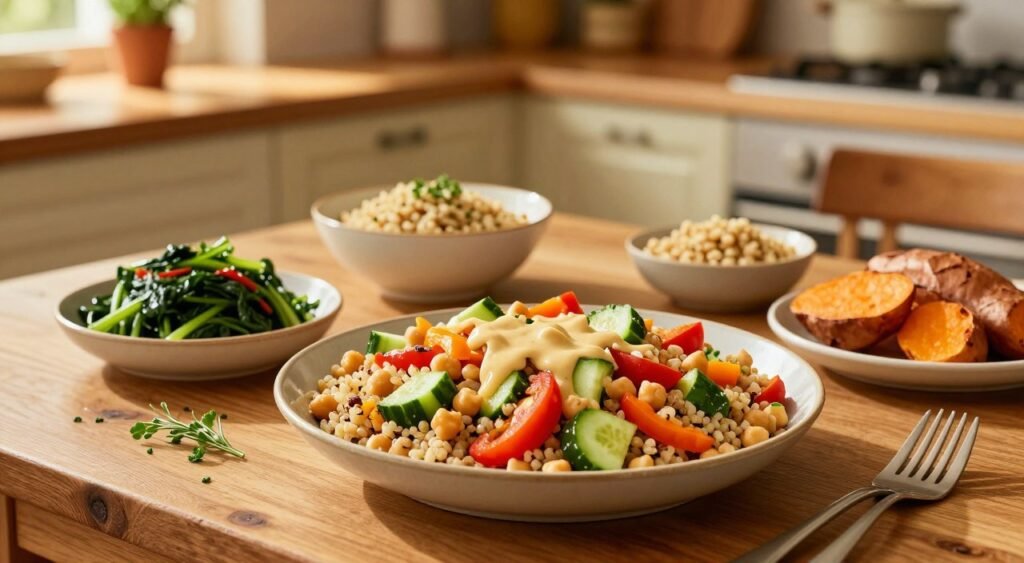

A 2024 review covering nearly 10 million participants found that high ultra-processed-food consumption increased cardiovascular-disease death risk by 50% and anxiety risk by 48%. Those findings put everyday eating patterns in focus, not any one ingredient. Acute inflammation is part of a normal immune response, while persistent inflammation has been linked with chronic disease.
Your daily meals can support health over time, especially when they emphasize varied, minimally processed foods. One ingredient cannot reliably prevent illness or control the body’s response on its own. This article offers practical food choices and meal ideas, along with a clear look at what research does and does not show.
Key Takeaways
- Build meals around a range of colorful fruits and vegetables.
- Choose whole grains, beans, lentils, nuts, and seeds regularly.
- Use fish and unsaturated oils as part of varied meals.
- Cut back on frequent ultra-processed foods and sugary drinks.
- Think of daily food choices as one part of supporting long-term health, not a stand-alone treatment for illness.
What Is the Difference Between Acute and Chronic Inflammation?
A red, warm, swollen, painful area around an injury is a familiar example of acute inflammation. This short-term response helps the body react to injury or infection.
Acute inflammation can last from a few hours to a few days, while chronic inflammation may continue for months or years. Chronic inflammation is linked with conditions such as heart disease, stroke, cancer, diabetes, arthritis, depression, and Alzheimer’s disease.

Possible signs of chronic inflammation include fatigue, fever, joint pain or stiffness, a skin rash, and gastrointestinal problems. Other symptoms can include abdominal pain, insomnia, weight change, or frequent infections.
These symptoms are nonspecific and can have many causes. They do not confirm inflammation or point to one disease by themselves. A health professional can help assess symptoms that persist or interfere with daily life.
Seek medical advice for persistent symptoms rather than trying to diagnose chronic inflammation from symptoms alone.
Which Anti Inflammatory Foods Belong on Your Plate?
Blueberries are a useful example of a colorful fruit that supplies plant compounds, but variety across the plate matters more than relying on one food. A varied mix of fruits and vegetables supports normal inflammatory regulation, not a quick “flush.”
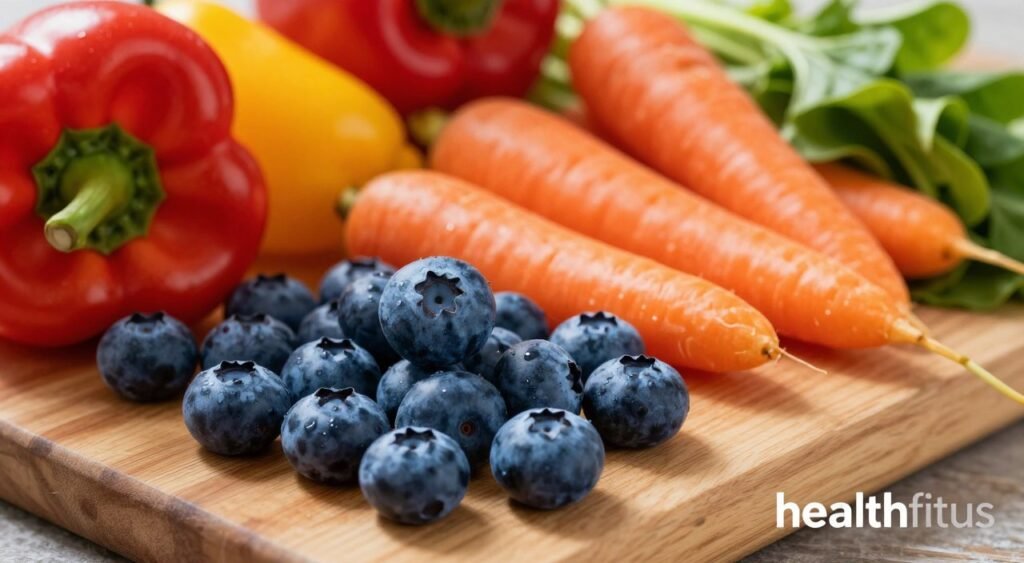
Fruits and vegetables provide fiber, vitamins, folate, carotenoids, and flavonoids. A review of 83 human studies found reduced circulating CRP and TNF-α in its meta-analysis of fruit and vegetable intake. A list of 20 anti-inflammatory foods is a practical starting point, not a ranked top 20 or top 10.
Colorful fruits and vegetables
These choices offer variety across colors and types. Blueberries contain plant compounds and can be one part of a varied fruit intake. A list of anti-inflammatory foods can include natural anti-inflammatory foods such as produce, beans, and seasonings.
- Leafy greens
- Broccoli
- Bok choy
- Tomatoes
- Beets
- Blueberries
- Blackberries
- Apples
- Citrus
- Cherries
- Pineapple
- Onions
- Garlic
- Ginger
- Turmeric
- Beans
- Lentils
- Walnuts
- Flaxseed
- Extra-virgin olive oil
Herbs, spices, and other plant foods
Garlic, ginger, and turmeric add flavor to soups, sauces, and roasted vegetables. Ten flexible everyday choices from the list are leafy greens, broccoli, tomatoes, blueberries, apples, citrus, onions, garlic, beans, and extra-virgin olive oil. They are convenient staples, not a medical ranking.
| Food group | Examples | Notable components | Easy use |
|---|---|---|---|
| Berries | Blueberries, blackberries, cherries | Fiber, anthocyanins | Stir into oatmeal |
| Citrus and apples | Oranges, apples | Fiber, flavanones | Pack as a snack |
| Leafy greens | Spinach, kale | Folate, carotenoids | Add to a salad |
| Cruciferous vegetables | Broccoli, bok choy | Fiber, vitamins | Steam as a side |
| Tomatoes and onions | Tomatoes, onions | Carotenoids, flavonoids | Cook into a sauce |
Choose produce in colors you already enjoy so the list can fit meals you will actually make.
How Do Whole Grains and Legumes Fit a Plant-Based Pattern?
A bowl of oats with fruit or lentils served over brown rice can combine whole grains and plant protein in a simple meal. Whole grains and legumes add fiber and help make plant-based meals filling.
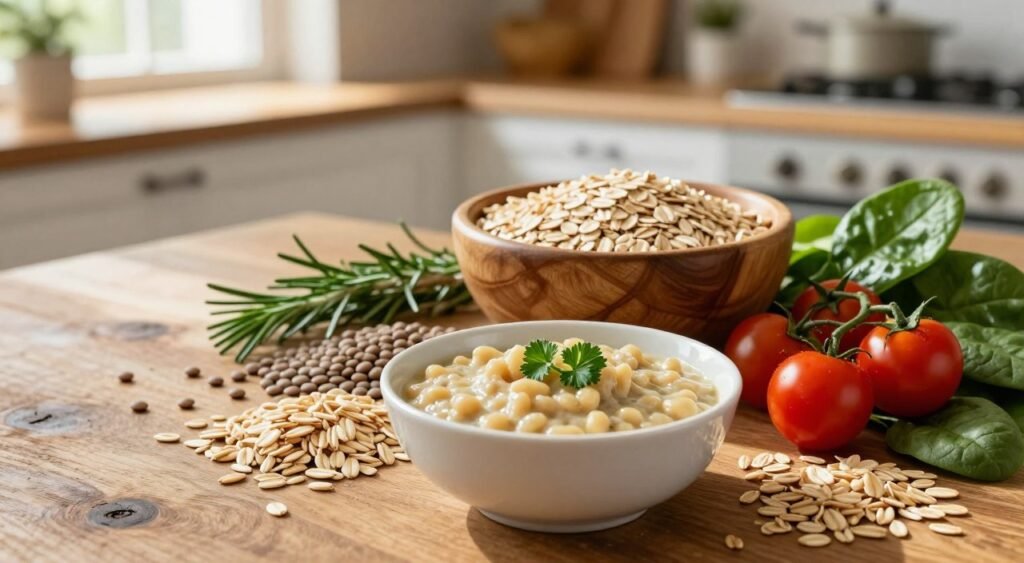
Oats, brown rice, quinoa, rye, buckwheat, and millet are whole-grain options. Serve them with beans, lentils, chickpeas, or soy foods such as tofu. Vegetarians can build satisfying meals from these staples without relying on meat substitutes.
Whole grains for fiber
Dietary fiber supports beneficial gut bacteria. You can use oats for breakfast, then add brown rice or quinoa to a lunch bowl. Rye, buckwheat, and millet also bring variety to side dishes and grain-based salads.
Beans, lentils, and soy
Beans, lentils, chickpeas, and soy offer plant-based protein for everyday meals. A plant-based eating pattern can include these whole foods alongside grains, vegetables, nuts, and seeds. For anti-inflammatory foods for vegetarians, whole grains and legumes are practical building blocks.
A 2026 meta-analysis of seven clinical trials involving 541 participants found a CRP reduction of −1.13 mg/L for plant-based patterns compared with omnivorous diets. The evidence had low certainty and high heterogeneity. Excluding trials with prescribed exercise still showed a −0.94 mg/L reduction, also with low-certainty evidence.
These findings suggest a possible difference, not a guaranteed effect for every person. Increase fiber-rich choices gradually and include enough fluids as you add more beans, lentils, and whole grains.
Which Proteins, Nuts, Seeds, and Oils Support the Pattern?
Salmon, sardines, and walnuts are practical ways to include sources of omega-3 fats in meals. Fatty fish, beans, nuts, seeds, eggs, and olive oil can all fit a varied eating pattern.
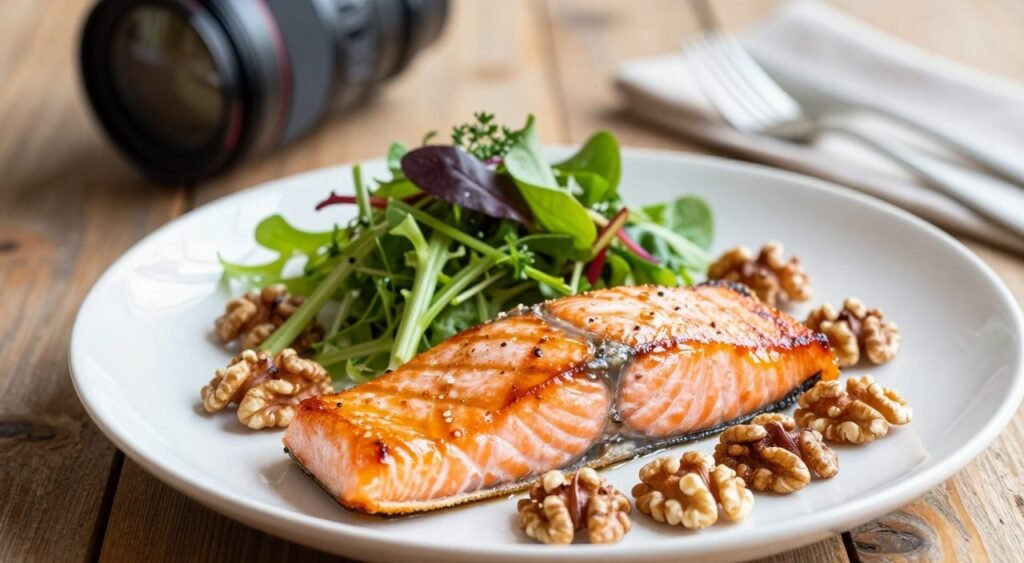
Eggs can be included as a protein choice; the overall eating pattern matters more than labeling one food. High-sensitivity C-reactive protein, or hs-CRP, is a blood marker used to assess low-level inflammation.
Fish and plant-based omega-3s
Salmon, mackerel, sardines, and tuna are fatty-fish options. Walnuts, flaxseed, chia seeds, and canola oil provide plant sources of omega-3 fats. Beans and soy add protein and offer alternatives to relying on meat at every meal.
Nuts, seeds, and cooking oils
Walnuts and seeds work in oatmeal, salads, or snacks. Olive oil can be used for dressings or to finish vegetables. A 2025 meta-analysis of 18 randomized trials found lower blood pressure, LDL cholesterol, total cholesterol, and hs-CRP with anti-inflammatory dietary patterns than with omnivorous diets.
| Food choice | Examples | Key nutrients | Simple use |
|---|---|---|---|
| Fatty fish | Salmon, sardines | Omega-3 fats, protein | Bake for dinner |
| Beans and soy | Black beans, tofu | Protein, fiber | Add to a bowl |
| Walnuts | Walnut halves | Omega-3 fats, fiber | Top oatmeal |
| Flaxseed and chia | Ground flaxseed, chia | Omega-3 fats, fiber | Stir into yogurt |
| Olive oil | Extra-virgin olive oil | Unsaturated fats | Use in dressing |
The reported mean differences were −3.99 for systolic and −1.81 for diastolic blood pressure. LDL cholesterol had a standardized mean difference of −0.23, total cholesterol −0.31, and hs-CRP −0.16. The trials found no notable association with HDL cholesterol or triglycerides. The reported cardiovascular findings describe group results, not a personal forecast.
Use olive oil in modest amounts for dressings or to finish vegetables, and rotate protein choices across the week.
Which Drinks Can Be Part of an Anti-Inflammatory Diet?
Unsweetened green tea, herbal tea, water, and coffee can all fit into a varied eating pattern. Evidence from green tea supplements or extracts does not establish the same effects for an ordinary brewed cup.
A meta-analysis of 15 randomized trials in people with metabolic syndrome and related disorders found lower TNF-α with green tea supplementation, but no overall effect on CRP or IL-6. Supplements used for eight weeks or less increased CRP in a subgroup analysis.
A 2023 meta-analysis of 55 randomized trials found green tea extract reduced total cholesterol by 7.62, LDL cholesterol by 5.80, fasting blood sugar by 1.67, HbA1c by 0.15, and diastolic blood pressure by 0.87. These results concern extracts, not proof that brewed tea treats disease.
Green tea, coffee, and dark chocolate contain polyphenols. Prefer unsweetened drinks most often, especially when replacing soda or sweetened tea.
Which Foods Should You Cut Back On?
A useful first change is to replace a recurring ultra-processed snack or sugary drink with a less processed option. Start by reducing frequent ultra-processed foods and sugary drinks rather than naming one universal “worst food.”
Ultra-processed foods may affect low-grade inflammation through nutrient content, non-nutritive components, and effects on gut health and the gut microbiota. A 2019 randomized study found that participants assigned to an ultra-processed diet ate about 500 more calories per day and gained about two pounds more over two weeks than those assigned to an unprocessed diet.
Highly processed foods and added sugars
2026 American Heart Association guidance recommends choosing minimally processed foods over ultraprocessed foods, minimizing added sugars and sodium, and limiting alcohol if you drink. These five categories are useful places to review your usual choices:
- Sugar-sweetened beverages and foods high in added sugar
- Heavily refined carbohydrates
- Deep-fried foods
- Processed meats
- Frequent red-meat or ultra-processed choices
Refined grains, fried foods, and meats
Swap baked potatoes for fries, or choose whole-grain bread instead of white bread. Baking, steaming, and quick stir-frying can replace deep frying. These changes reduce reliance on refined carbohydrates and fried foods without treating any single food as forbidden.
Frequent processed meats and red meat can be reduced by choosing beans, fish, or poultry more often. Check ingredient lists for partially hydrogenated oils, which indicate trans fat. Check sauces and dressings too, since they can add sugar, trans fat, and sodium to an otherwise nourishing meal.
How Can You Build Anti-Inflammatory Meals Each Day?
A simple daily pattern can start with oatmeal and fruit, continue with beans and greens at lunch, and end with vegetables, whole grains, and lean protein. Consistent eating habits support the body’s inflammatory regulation better than a quick cleanse.
No single food makes a diet anti-inflammatory. A Mediterranean-style diet offers a useful pattern, with vegetables, fruits, whole grains, healthy protein sources, and unsaturated fats. You can adapt it to your budget, preferences, and familiar recipes.
A Mediterranean-style day
Use these meal ideas as flexible examples, not a fixed menu:
- Breakfast: oatmeal topped with berries or apple.
- Lunch: a greens-and-beans salad with vegetables and seeds.
- Dinner: vegetables with whole grains and lean protein.
The 2026 Dietary Guidance to Improve Cardiovascular Health recommends varied vegetables and fruits, mostly whole grains, healthy protein sources, and replacing saturated fats with unsaturated fats. The 2026 U.S. Dietary Guidelines website also prioritizes whole, healthy, and nutritious foods.
Building a balanced plate
A practical plate can hold colorful vegetables in one half, then whole grains and lean protein in the remaining quarters. Swap ingredients to suit the meal: use beans instead of poultry, or choose avocado oil instead of another cooking fat. Olive oil can also fit this pattern.
A meta-analysis of 17 clinical trials involving 2,300 people linked greater adherence to the Mediterranean diet with lower CRP and interleukin-6. A review of 23 randomized trials involving 3,294 adults with chronic disease found a small improvement in physical health-related quality-of-life scores with anti-inflammatory diets: standardized mean difference 0.17, with a 95% confidence interval of 0.06 to 0.27.
The review found no significant improvement in mental or general scores. Certainty was low for physical and mental outcomes, very low for general outcomes, and no included study met Cochrane criteria for low risk of bias. Those findings do not prove that a diet treats illness. Start with one repeatable change, such as adding a serving of vegetables to a meal you already eat.
Conclusion
A steady pattern of varied, minimally processed foods is a practical place to begin. Nutrition supports health as part of a broader approach, alongside medical care and other daily habits. It cannot replace treatment for a health condition or promise to prevent chronic inflammation.
Choose a change that feels manageable and fits the meals you already enjoy. You might add a plant-based protein, try a whole-grain option, or replace a sugary drink. Keep the adjustment simple enough to repeat, then build from there if it works for you.
Choose one meal this week and add a colorful vegetable, a whole grain, or a plant-based protein to it.