


Most healthy adults can start with about 13 cups of fluid per day for men or nine cups for women, then adjust for individual needs. A daily water consumption calculator can help you turn that starting point into a practical estimate. Total water is the water you get from beverages and food combined.
Food and other beverages contribute to hydration, so your drink target is not necessarily the same as your total water. Body size, activity, and environment can shift how much fluid your body needs. A 2022 study found that adult water turnover ranged from about 1.5 liters to more than 6 liters per day, showing how widely water use can differ.
Use the calculator below as a quick estimate, then consider whether its result fits your circumstances. The number can help you plan, but it cannot account for every health need or change in your day. Treat the calculator’s result as a practical starting point, not a personal medical prescription.
Key Takeaways
- Food and beverages both contribute to total water.
- A calculator gives an estimate, not a prescription.
- Body size, activity, and environment affect fluid needs.
- Check whether a target counts drinks alone or total water.
- Health conditions may call for guidance from a clinician.
How Much Water Do Adults Need Per Day?
For generally healthy adults, the U.S. reference is 15.5 cups of total water per day for men and 11.5 cups for women. Those figures include water from food as well as beverages, so they are not plain-water targets. After accounting for food, men typically need about 13 cups of fluid per day and women about nine cups.
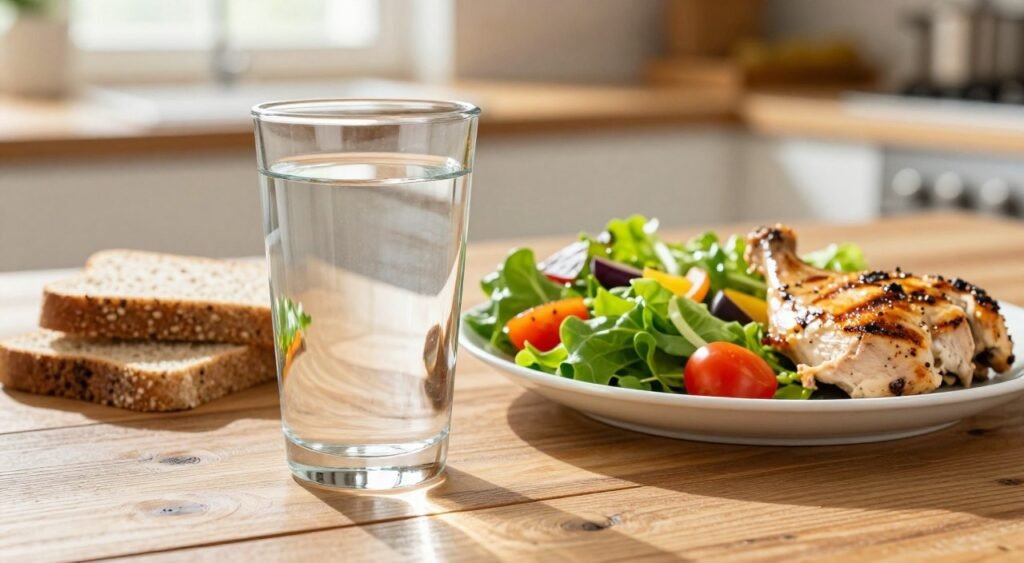
The reference amounts are adequate intake estimates for healthy adults, not exact needs for every person. Body size, activity, and climate can shift your water intake per day. The familiar rule of eight 8-ounce glasses is a rough slogan, not a universal research-based requirement.
Food can supply a meaningful share of your total water, so a daily figure needs context. If you use an NHS water intake calculator, check whether the result covers beverages only or total water from food and drinks. The distinction matters when comparing its result with a U.S. estimate.
A calculator may describe a beverage target, while a nutrition reference may describe total water. Those are related measures, but they do not use the same denominator. Comparing them without checking what each includes can make a normal estimate look too low or too high.
For a practical comparison, identify whether the number refers to fluid intake or total water. Then consider whether the estimate was designed for a generally healthy adult or a specific situation. Compare like with like by checking whether a daily figure includes food as well as drinks.
How to Use a Daily Water Consumption Calculator
A 150-pound adult can begin by entering weight, activity, and climate if those fields are available. Consistent units help the water intake calculator process your details without a conversion error. A daily water consumption calculator by weight uses body size as a starting point, while activity and climate can affect the final estimate.
Enter the Details the Calculator Requests
Enter your current body weight rather than a remembered or rounded figure from years ago. If the tool asks for pounds, use pounds; if it asks for kilograms, use kilograms. A mismatch between pounds and kilograms can make the resulting amount misleading.
Some tools ask about activity level or climate because those factors can affect daily water needs. Choose the option closest to your usual conditions, not an unusually demanding day. If a field does not fit your circumstances, avoid selecting a more extreme choice just to make the result seem personalized.
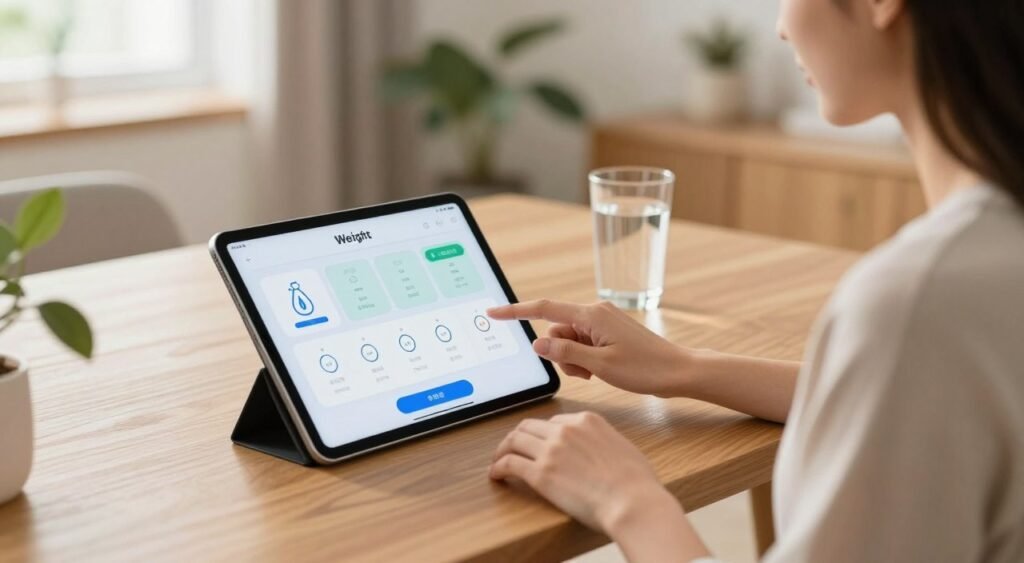
Use these steps to get a readable estimate:
- Enter your current weight in the unit the calculator requests.
- Select the closest activity option available.
- Note the unit and whether the result counts drinks alone or total water.
Read the Estimate in the Right Units
Calculators may display liters, fluid ounces, or cups. In the United States, an 8-ounce cup is a common serving-size reference, but a calculator may use a different cup size. Check the stated unit before translating the estimate into glasses or bottle refills.
A common weight-based rule of thumb is about 30-40 milliliters of fluid per kilogram of body weight per day. That range is a way to form a starting estimate, not a precise prescription. A calculator may use a different rule, so its result can differ even when you enter the same weight.
For example, an estimate in liters can be converted to milliliters by multiplying by 1,000. A result in fluid ounces can be compared with a bottle label or measuring cup. Keep the original unit alongside any conversion so you can spot a mistake later.
The amount shown is not a promise that your body needs exactly that volume every day. Your needs can shift with your circumstances, and the tool may not account for medical factors. Before acting on the result, confirm whether it represents beverages or total water from food and drinks.
How Does a Calculator Estimate Water Needs?
A 2022 study of 5,604 people in 23 countries measured water turnover directly and found a wide range of adult daily values. Water turnover ranged from about 1.5 liters to more than 6 liters per day among adults. Turnover describes water moving through the body, not the amount you must drink.
Total Water, Fluid Intake, and Water Turnover
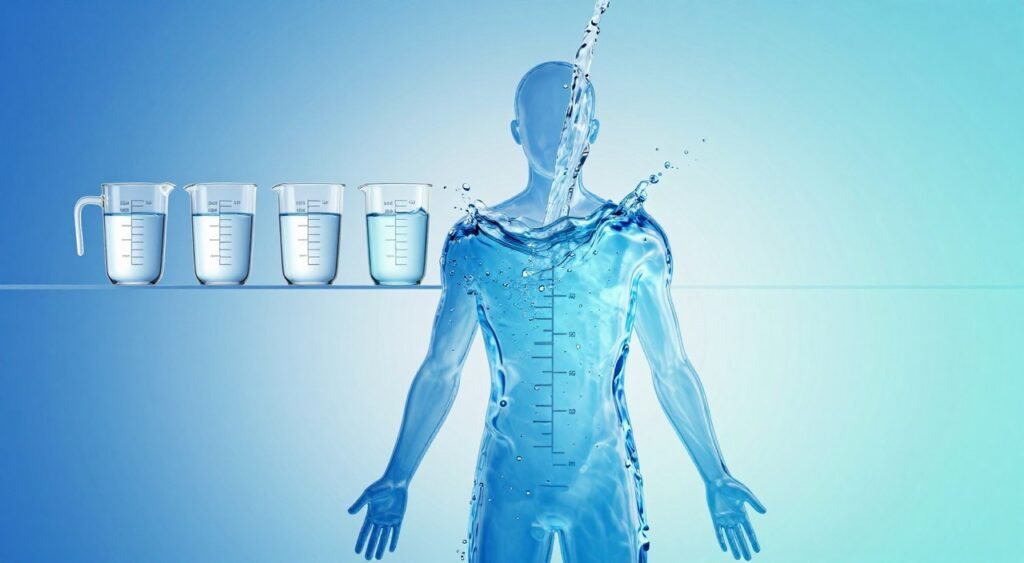
Total water includes water from food and beverages. Fluid intake means water that enters through food and drinks, while water turnover measures water moving through the body each day. These terms describe related but different parts of hydration.
Water leaves the body through urine, sweat, breathing, and other processes. About 85% of water turnover is replaced through food and drinks; the remainder comes from metabolic water. Metabolic water forms as the body processes nutrients.
A research-based equation can use body size, age, sex, activity, and environmental inputs to estimate turnover. Other tools use simpler rules of thumb, such as a volume tied to body weight. The method matters because each calculation represents its own set of assumptions.
Why Estimates Differ Between Calculators
One water calculator may ask for age and activity, while another uses only weight. A tool may estimate water turnover, fluid intake, or a drink target. Those outputs can use liters or other units, and the labels may not be interchangeable.
Water turnover includes water the body produces through metabolism, so it is not the same as a drink target. A tool that estimates turnover cannot be read as a recommendation to drink that same volume. Look at the output label and the factors the calculator includes.
Even calculators with similar inputs can apply different equations or assumptions. One may treat activity as a broad category; another may use a more detailed level. Compare the assumptions behind two estimates before treating their different results as a meaningful disagreement.
How Does Body Weight Affect Water Intake?
At 150 pounds, an illustrative weight-based estimate ranges from 71 to 92 fluid ounces as activity rises. Body weight offers a starting point, not a fixed daily requirement. A common rule of thumb uses about 30-40 milliliters per kilogram per day, with activity affecting the estimate.
A water intake calculator in kilograms and liters follows the same estimation idea as one using pounds and ounces. It uses body size as a baseline, then may account for other details. The unit system changes how the result is displayed, not the underlying idea.
The table shows illustrative drink estimates from a weight-based rule, using 31, 35, and 40 milliliters per kilogram. These figures are not official targets. The columns represent lower, moderate, and higher activity estimates, rather than guaranteed needs for each weight.
| Body weight | Lower activity estimate | Moderate activity estimate | Higher activity estimate |
|---|---|---|---|
| 100 lb / 45.4 kg | 48 fl oz | 54 fl oz | 61 fl oz |
| 150 lb / 68.0 kg | 71 fl oz | 81 fl oz | 92 fl oz |
| 200 lb / 90.7 kg | 95 fl oz | 107 fl oz | 123 fl oz |
To estimate how much water to drink in a day according to weight in kg, use weight as a baseline and consider your level of activity. Higher activity can raise the practical amount, while a less active day may call for less. The table is best read as a range of examples, not a prescription.
If your calculator uses kilograms, check that you entered kilograms rather than pounds. A 150-pound body weight is about 68.0 kilograms, so the same person can appear to have a very different size after a unit mix-up. Use the closest weight row as a starting comparison, not as a requirement to hit an exact number.
How Do Age and Sex Change Water Needs?
Age does not change estimated water needs in a straight line, and the pattern differs between men and women. Age is one input, alongside body size, activity, and environment. An adult calculator is not the right tool for setting a child’s or teen’s fluid needs.
Water turnover peaks for men in their 20s. Women’s turnover stays relatively stable from age 20 through age 55, then declines. These patterns do not create a simple age-based formula for every individual adult.
A daily water consumption calculator by age can help an adult compare an estimate with a relevant age group, if the tool is designed for adults. A water intake calculator by age should not be used to apply adult figures to a child or teen. Their fluid needs differ from adult patterns and require age-specific guidance.
Sex is one factor in an estimate, not a standalone measure of the right amount. Body size and daily demands also matter, and two adults of the same age or sex can have different needs. Treat an age or sex setting as one part of the tool’s method, rather than a personal medical assessment.
Age-related changes also do not mean your intake should automatically rise or fall at a birthday. The adult pattern is not linear, and changes in health or routine can be more relevant than age alone. Use an adult estimate only for an adult, and seek age-specific guidance for a child or teen.
How Should Activity, Climate, and Altitude Change Intake?
A workout on a hot day can increase fluid loss through sweat beyond what a quiet day’s estimate suggests. Effort and conditions matter because the body loses more water when sweating rises. A general exercise guide is about 500-750 milliliters of fluid per hour, not a fixed amount for every workout.
Exercise and Sweat Losses
How much sweat you lose depends on exercise intensity and how much you personally sweat. A steady walk in mild conditions does not create the same loss as hard training. The hourly guide offers a broad reference, not a rule to drink the same amount regardless of effort.
Competitive athletes showed about 1,000 milliliters more water turnover per day than non-athletes. That difference reflects a group comparison, not a precise extra amount for every person who trains. Your activity level can change the estimate, but the number on a calculator may not reflect a particular workout.
Heat, Humidity, and Altitude
Hot weather can increase sweat losses, and humidity can make it harder for sweat to evaporate. Dry air at altitude can increase respiratory water loss as you breathe. These conditions can change fluid needs even when your usual routine stays the same.
Measurements found about a 1-liter-per-day difference in water turnover between mean air temperatures of 10°C and 30°C. That is a population-level difference, not a personal instruction to add exactly one liter. Use the information to recognize that temperature can shift a baseline.
| Condition | Measured difference | Practical meaning |
|---|---|---|
| Mean air temperature 10°C versus 30°C | About 1 L/day difference in turnover | Warmer conditions can raise needs |
| Competitive athlete versus non-athlete | About 1,000 mL/day higher turnover | Training status can affect a baseline |
| Exercise | 500-750 mL/hour general fluid guide | Adjust for effort and sweat loss |
Activity and climate should be considered together. A high-intensity session in humid heat can create more sweat loss than a short, easy workout indoors. Reassess your intake on the days your training or weather is substantially different from usual.
How Much Water Comes From Food and Other Drinks?
Food typically supplies about one-fifth of the water people need in a day. That share counts when you compare your fluid intake with a total-water estimate. Water, coffee, tea, and water-rich foods all contribute to hydration.
Fruits and vegetables contain water, and soups can add fluid alongside a meal. Coffee and tea also contribute to fluid intake for habitual drinkers. Moderate caffeine intake does not cause net fluid loss in people who regularly consume it.
Examples of foods and drinks that contribute water include:
- Water-rich produce, such as fruit and vegetables
- Soup
- Milk
- Unsweetened tea or coffee
Plain water remains a straightforward drink choice, but it is not the only source of fluid. The amount of water you get from food depends on your eating habits. A day with soup and water-rich produce will contribute differently from a day with fewer such foods.
When you count beverages, include coffee and tea if you drink them habitually. Do not assume that a total-water estimate means you must drink that entire amount as plain water. Include the water in foods and drinks when comparing your day with a total-water reference.
How Can You Tell If You’re Drinking Enough?
Pale-yellow urine is a useful day-to-day sign that overall water intake is adequate. Use it as a practical check, not a precise measurement of every fluid need. Dark urine, dry mouth, fatigue, or dizziness can signal inadequate fluid intake.
Urine color can change for reasons beyond hydration, so judge it alongside how you feel and what has happened that day. A darker color can be a prompt to consider recent fluid loss or limited drinking. It does not diagnose dehydration on its own.
Thirst is useful for many healthy adults as a cue to drink. It may be less dependable during prolonged activity or with older age. In those situations, thirst alone may not reflect changing fluid needs quickly enough.
Losing 1-2% of body water may affect physical performance and concentration. The effects can matter during exercise, work, or tasks that require focus. A small change in body water can be easy to overlook until performance or attention shifts.
Everyday checks are different from signs of severe dehydration. Confusion, fainting, or a rapid heartbeat or breathing need urgent medical attention. Seek urgent medical attention for confusion, fainting, or a rapid heartbeat or breathing.
When Should You Adjust Intake or Ask a Clinician?
Pregnancy is one situation where a general estimate should be checked against specific guidance. Individual guidance matters because pregnancy and other health changes can affect fluid needs. Heart or kidney conditions may require clinician-directed fluid limits.
Pregnancy guidance recommends 3.0 liters of total water per day, including approximately 2.3 liters from beverages. The American College of Obstetricians and Gynecologists recommends 8-12 cups of fluid per day during pregnancy. These measures count different things, so compare each amount with its label.
| Pregnancy guidance | Daily amount | What it counts |
|---|---|---|
| Total-water guidance | 3.0 L | Food and beverages |
| Beverage portion | Approximately 2.3 L | Drinks |
| American College of Obstetricians and Gynecologists | 8-12 cups | Fluids |
A 2024 survey of 137 pregnant women found that 63% lacked knowledge of hydration recommendations, and 67% were not meeting them. Fifty-nine percent were not tracking fluid consumption. Forgetting to drink and not feeling thirsty were each reported by 47%, while increased urination was reported by 33%. These results describe survey participants, not every pregnant person.
Fever, vomiting, diarrhea, pregnancy, and breastfeeding can change fluid needs. A general calculator result is not individualized medical advice for pregnancy, breastfeeding, children, older adults, or people with conditions affecting fluid balance. Seek personalized clinical guidance for these situations:
- Pregnancy or breastfeeding
- A condition or medication that affects fluid balance
- Persistent excessive thirst or fluid-loss illness
Drinking excessive amounts in a short time can dilute blood sodium and cause hyponatremia. A fluid limit may also be part of care for a heart or kidney condition. Follow a clinician’s advice when an illness or health condition changes your fluid balance.
How Can You Build a Hydration Routine?
A marked bottle makes a daily estimate easier to track without counting every sip. Simple cues can make drinking feel like part of your day rather than another task. Spread fluid intake across your waking hours instead of trying to catch up all at once.
Use Simple Cues to Remember Drinks
Keep a marked bottle where you work or spend time at home. The markings show how much you have used without requiring a count for every glass. A bottle can also make your usual drinking pattern easier to notice.
Add a drink to an existing meal or break, such as lunch or a scheduled pause at work. If forgetting is common, set a reminder on your phone or calendar. A cue tied to something you already do can be easier to keep than a rigid schedule.
Pace Fluids Across the Day
A 500-milliliter bottle holds 16.9 fluid ounces, and a 1-liter bottle holds 33.8 fluid ounces. Those sizes make it easier to compare your intake with a target displayed in familiar units. Choose a container with clear markings if you want to track refills.
Sip regularly rather than taking a large amount at once to make up for earlier missed drinks. The kidneys can process about 0.8-1.0 liters of fluid per hour, so rapid intake is not a useful way to meet a daily goal. That processing range is not a target for hourly drinking.
A routine does not need to assign a precise amount to every hour. Your schedule, meals, and access to drinks can shape how you spread intake. Keep the plan flexible enough to fit an ordinary day without turning each refill into a deadline.
If you use a bottle with a known capacity, you can estimate the number of refills without constant measuring. A marked bottle also helps distinguish a quick drink from a nearly full container. Choose a bottle size you can measure easily and spread refills across your waking hours.
Conclusion
A useful daily target is one you can apply to your own routine and circumstances. A calculator can provide a starting estimate, but your activity, environment, and health can change what is appropriate. Use the number as a practical guide rather than a demand to match an exact amount every day.
Notice whether the result describes beverages or total water, then keep it in the units you normally use. If your health or routine changes, reconsider whether the same estimate still fits. Save your estimate in the units you use and make small adjustments as your usual conditions change.