
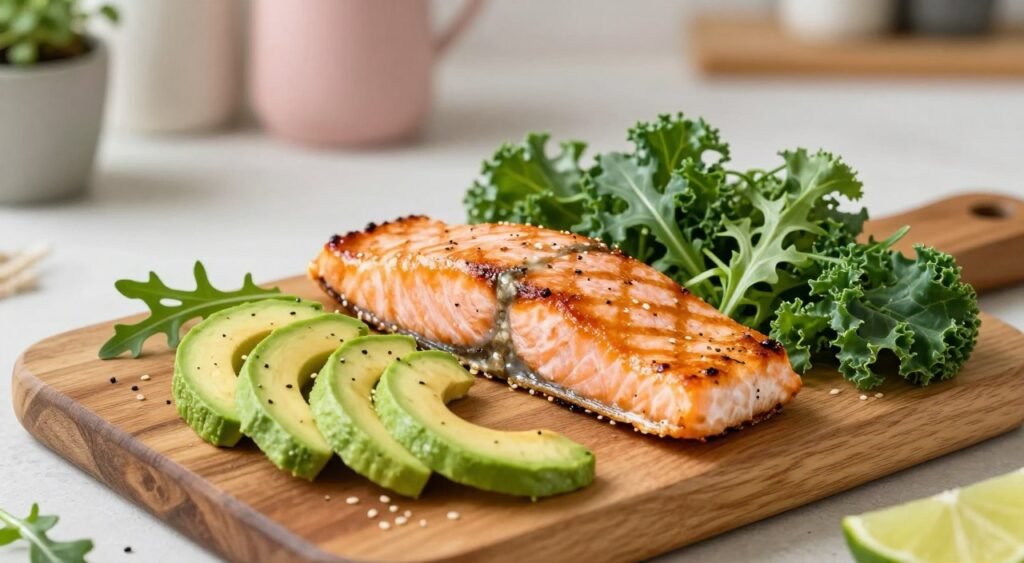

A beginner keto diet meal plan pairs simple low-carbohydrate meals with a little advance planning, and it works best when it fits your tastes and health needs. A typical meal combines protein, non-starchy vegetables, and fats, with portions and ingredients adjusted to your needs. A 12-cup muffin tin, for example, can turn eggs and vegetables into several breakfasts at once.
A meal plan can make daily choices easier, but it does not promise weight loss or suit everyone. This weeklong starting point offers seven recipes, a flexible schedule, and ideas for making the meals fit your lifestyle. You can repeat favorites, switch ingredients, or change portions as needed. Treat the week as a flexible starting point, not a rulebook.
Key Takeaways
- Build meals around protein, non-starchy vegetables, and a source of fat.
- Use the recipes and schedule as flexible options, not fixed rules.
- Adjust servings and ingredients to your preferences and health needs.
- Ask a healthcare professional about safety if you take medication or have a health condition.
- Weight loss is not guaranteed, and the eating pattern is not right for everyone.
What Makes a Diet Ketogenic?
Keto is a very-low-carbohydrate eating pattern that gets most of its energy from fat and includes moderate protein. Net carbohydrates equal total carbohydrate grams minus dietary fiber grams. Ketogenic diets are commonly described as providing less than 10% of daily energy or less than 50 grams of carbohydrates per day.
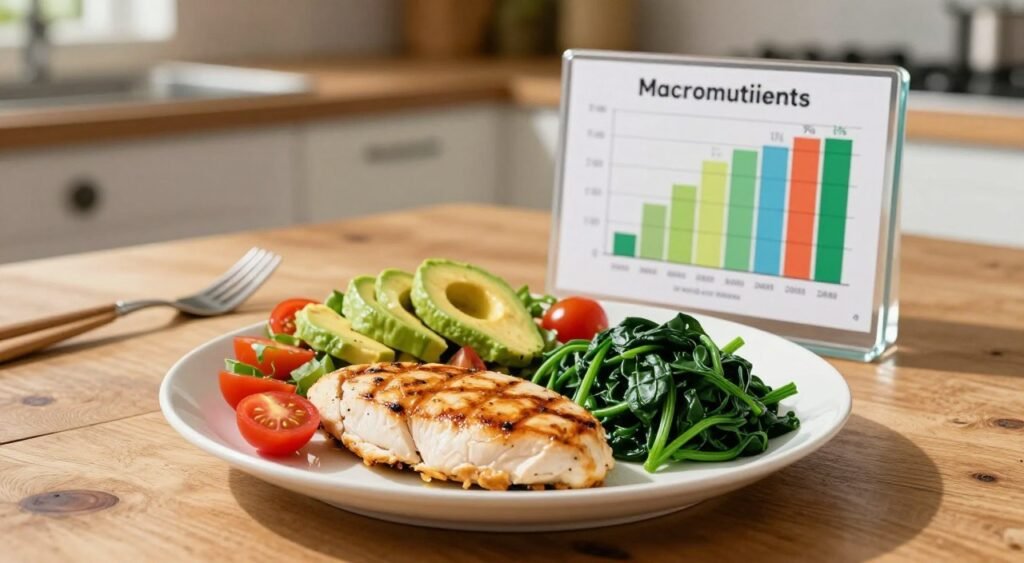
Those broad limits describe the eating pattern, not a personal prescription. A common macronutrient pattern assigns about 5-10% of calories to carbohydrates, 70-75% to fat, and 15-20% to protein. The percentage pattern is one way to describe a keto diet, not a requirement for every person.
The macronutrient pattern
Carbohydrates provide less energy in this approach than in an ordinary menu. Fat supplies most of the remaining energy, while protein supports meals without becoming the main source of calories. The balance can vary across ketogenic diets.
| Nutrient | Approximate share of calories | Role in the eating pattern |
|---|---|---|
| Carbohydrates | 5-10% | Kept very low to support the pattern |
| Fat | 70-75% | Provides most of the energy |
| Protein | 15-20% | Provides moderate amounts in meals |
Ketosis and carbohydrate limits
When carbohydrate intake drops, the body can rely more on fat and produce ketones as an alternative fuel source. This state is called ketosis. The amount of carbohydrate needed to reach it differs between people, so one target cannot guarantee ketosis for everyone.
That distinction matters when comparing diets or reading claims about keto benefits. Some descriptions use a percentage of daily energy; others use a gram limit. The counting method also matters because total carbohydrates and net carbohydrates are not the same measure.
Use any numerical target as a starting point for a clinician-guided conversation, not a guarantee of ketosis.
Who Should Get Medical Advice Before Starting?
Check with your healthcare professional before cutting carbohydrates if you take diabetes medication, blood pressure medication or have a condition that could affect nutrition. Medication review matters because changes in food intake can alter blood glucose or blood pressure. Some medicines may need adjustment as your diet changes.
People using insulin or a sulfonylurea should consult a doctor before reducing carbohydrates below 20 grams per day. Carbohydrates break down into glucose and raise blood glucose. Eating too little carbohydrate, or having a mismatch between food and medication, can cause blood glucose to fall too low.

Diabetes medicines and low blood glucose
Low blood glucose can cause symptoms that need prompt attention, and medication doses may need adjustment when carbohydrate intake changes. A ketogenic diet combined with an SGLT2 inhibitor also raises ketoacidosis risk, even when blood glucose appears normal. Discuss the specific medicine and a monitoring plan before making a change.
Bring a short set of questions to your appointment:
- Would any medication changes be needed if I reduce carbohydrates?
- How should I monitor my blood glucose during a diet change?
- Which symptoms or readings need prompt medical attention?
Other medicines and health situations
Blood pressure medication also deserves review, since changes in eating habits can affect blood pressure and treatment needs. A clinician can consider your conditions, prescriptions, and nutrition needs together. Share any supplements or over-the-counter medicines you use, too.
A history of illness or a condition that affects eating or nutrient needs may call for a different approach. Medical guidance can help you decide whether a restrictive diet is appropriate and what changes need monitoring. Do not rely on a generic online schedule to account for an individual health history.
Keto diet planning for seniors
A free keto diet plan for seniors is not automatically suitable for every older adult. A clinician who knows the person’s conditions, medicines, appetite, and nutritional needs can help assess the plan. Changes in appetite, mobility, or daily routines may also affect how practical it is.
Older adults may need a plan that protects adequate nourishment while fitting existing care and medicine routines. Bring the actual meals and proposed carbohydrate target to the appointment, rather than discussing keto in general terms. Do not change prescribed medication doses on your own.
How Do You Count Carbs From Food Labels?
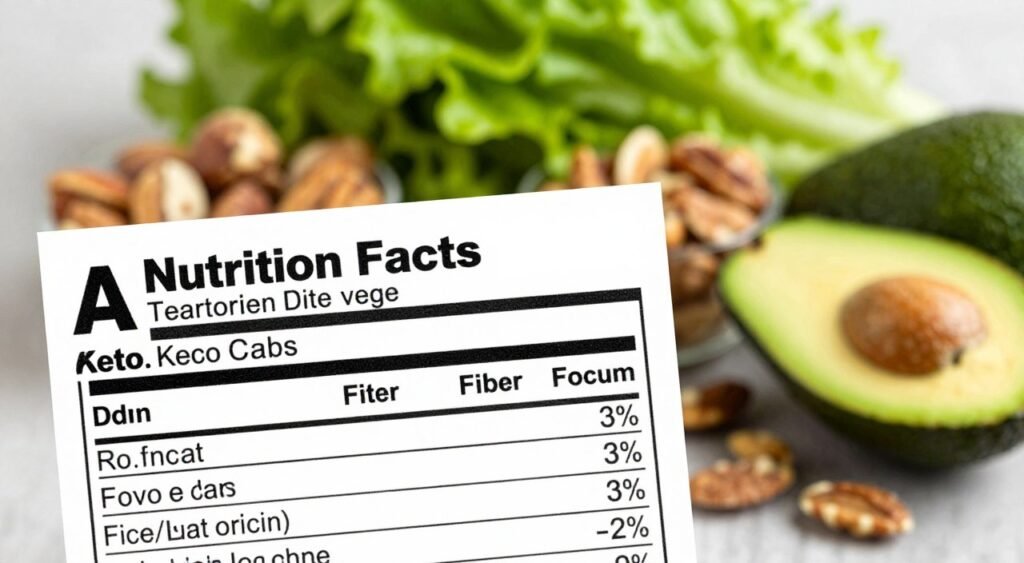
Start with the total carbohydrate grams for one labeled serving, then check the fiber listed on the same label. Subtract the fiber from total carbohydrate to estimate net carbohydrates for that serving. The Nutrition Facts label lists total carbohydrate, dietary fiber, total sugars, and added sugars in grams.
Use the amount you actually eat, not an assumed package portion. The label also shows each nutrient’s Daily Value, or DV, as a percentage. Five percent DV or less is a general low guide, while 20% DV or more is a general high guide.
Read the Nutrition Facts label
Find the line for total carbohydrate first, then locate dietary fiber beneath it. If a serving lists 12 grams of total carbohydrate and 5 grams of fiber, subtract 5 from 12. That serving has 7 grams of net carbohydrates by this calculation.
Use the grams to do the calculation. The Daily Value percentage helps you see whether a nutrient amount is generally low or high compared with a full-day reference, but it is not a keto limit. A food with a low Daily Value can still contribute to your personal daily total.
Check the serving size before calculating
The serving size describes an amount people typically eat or drink. It is not a recommendation for how much to consume. If you eat twice the listed serving, count twice the listed carbohydrate and fiber amounts; if you eat half, count half.
For foods with more than one serving per package, check both the serving amount and the number of servings in the container. A snack bag can hold multiple labeled servings, even when it looks like one portion. Recheck the serving size whenever a package contains more than one serving.
Foods to Choose and Limit
Build most meals from a protein food, non-starchy vegetables and a source of fat, then keep starches and added sugars limited. Vegetable variety helps keep meals from becoming a short rotation of meat and fats. The right mix also depends on your preferences and carbohydrate target.
Bread, rice, pasta, sugary drinks, and sweets can use a limited carbohydrate allowance quickly. Small portions of berries fit some ketogenic approaches. Full-fat dairy is not automatically carbohydrate-free, so the Nutrition Facts label still matters.

| Food group | Choose more often | Limit or portion carefully |
|---|---|---|
| Proteins | Eggs, chicken, salmon, other fish | Coated or sweetened meat products |
| Non-starchy vegetables | Spinach, cauliflower, leafy greens | Large portions of starchy vegetables |
| Fats and dairy | Olive oil, avocado, nuts, seeds | Sweetened yogurt, large dairy portions |
| Grains, starches and sweets | Small portions of berries when suitable | Bread, rice, pasta, potatoes, sugary drinks, sweets |
Low-carbohydrate meal staples
Eggs and chicken work in quick breakfasts, lunches, or dinners. Salmon adds variety, while spinach and cauliflower can fit beside different proteins. Avocado, nuts, seeds, and olive oil can add fat and flavor to a meal.
Choose foods you enjoy and can use in more than one dish. A bag of spinach can go into eggs or a salad, while cauliflower can be roasted or served as a side. Keeping familiar ingredients on hand can make it easier to follow a plan.
Foods to keep small or occasional
Bread, pasta, rice, potatoes, sweets, and sugary drinks are carbohydrate-rich choices to limit on many ketogenic approaches. Berries may fit in a modest serving, depending on the rest of the day’s food. A product’s label can clarify how a serving contributes.
Dairy choices need the same attention as other packaged foods. Plain and flavored products can differ, and full-fat does not mean carb-free. Keep vegetables varied rather than letting a short list of low-carbohydrate favorites crowd out the rest of the plate.
Build a Balanced Keto Plate
Start by filling half your plate with non-starchy vegetables, then add protein and enough fat to prepare the meal. Vegetables first gives the plate a useful visual balance, even when the main dish is rich. Eggs, chicken, fish, and tofu can all provide protein.
Make non-starchy vegetables half the plate, following the American Diabetes Association’s Diabetes Plate model. Carbohydrates include starches, sugars, and fiber, so the word does not refer only to sweets. The amount in a meal depends on its ingredients and portions.
Use olive oil, avocado, or another fat for cooking or flavor. Butter can also be used in cooking, but a generous pour or extra pat can quickly make a meal richer than intended. Measure the amount when you want a more consistent serving.
For an easy plate, serve salmon with spinach and cauliflower. Cook the vegetables with a measured amount of olive oil, or dress them with a small measured vinaigrette. The fish supplies protein, and the vegetables give the meal color and texture.
Adjust the protein portion and cooking fat to your appetite and needs. If you prefer eggs or tofu, use the same plate structure and choose vegetables that are available. A small change in seasoning can make the same ingredients feel like a different meal.
A plate can still include some carbohydrate from vegetables and other ingredients. The goal is to build the meal intentionally, not to treat every carbohydrate as a dessert or remove all plant foods. Make the vegetable portion the visual anchor, even when the main dish is rich.
A Practical Keto Grocery List
Shop for ingredients that can be combined across several meals, rather than buying a separate item for every recipe. Versatile basics help you make a meal from what is already in the refrigerator. Choose amounts that suit the number of people you feed.
A starter list works best when it covers proteins, vegetables, fats, dairy or alternatives, and nuts or seeds. Adapt the choices for allergies, food preferences, and meals you already enjoy. You do not need every item for one week.
- Protein foods: eggs, chicken, and salmon.
- Non-starchy vegetables: spinach, mushrooms, and cauliflower.
- Fats: olive oil and avocado.
- Dairy or alternatives: plain yogurt and cheese.
- Nuts and seeds: almonds and chia seeds.
- Flavor basics: garlic, herbs, lemon, and vinegar.
Use the same spinach for an omelet and a salad, or roast cauliflower to serve with more than one dinner. Eggs can cover breakfast and a quick lunch, while lemon, herbs, and vinegar make simple vegetables taste brighter. Ingredients that work together are easier to use up.
Choose plain yogurt or a suitable alternative that fits your preferences. If you avoid dairy, pick an alternative you like and check its ingredients. For nuts or other allergens, replace them with safe options rather than buying a food you cannot use.
Keep the list short enough to fit your week. A few core ingredients can support several combinations without leaving you with specialty items for one recipe. Check the pantry and refrigerator before buying duplicates.
Set Up a Week of Meals and Leftovers
Choose a few meals you can repeat, then deliberately plan which dinner will become tomorrow’s lunch. Planned leftovers reduce cooking without requiring a new recipe every day. Scale the ingredients to the number of people eating.
A four-serving dinner can provide two servings for dinner and two portions for the next day. Whole Foods Market’s keto-friendly plan is designed for two adults, and most linked recipes serve 2-6 people. Many dinners make four servings, which makes this simple split practical.
That plan also repeats breakfasts and uses some grab-and-go or ready-to-eat options for lunch and dinner. Repeating breakfast can save time, while a prepared salad or another suitable ready-to-eat meal can cover a busy midday. Leave room for the foods you already have.
Before cooking, use this short preparation sequence:
- Check the refrigerator, freezer, and pantry for ingredients already on hand.
- Write a grocery list for the meals you selected.
- Wash or chop vegetables that will keep well until you use them.
- Prepare one or two components ahead, such as cooked chicken or washed greens.
Set aside the portions you intend to use later before serving dinner. That makes it easier to keep the next day’s lunch available, especially in a shared household. A marked container can help everyone know which food is reserved.
Keep the schedule flexible when plans change. A leftover dinner can become lunch, while a no-cook option can replace a meal that takes more time to prepare. Refrigerate leftovers promptly and plan when you will use them.
7 Easy Recipes for a Keto Diet Meal Plan
Start with recipes that reuse eggs, spinach, chicken, salad greens and a few familiar seasonings. Simple combinations make these meals easier to try, even if you are new to cooking. Adjust ingredient amounts to your appetite and household.
Cook chicken breasts to an internal temperature of 165°F before serving. The seven recipes below include quick breakfasts, salads, and dinners. Check packaged ingredients such as sauces and granola to see whether they fit your needs.
- Egg white omelet bites. Blend 16 ounces of egg whites with 1/2 cup cottage cheese, then season with salt and pepper. Stir in chopped spinach, roasted red peppers, and basil. Pour into a greased 12-cup muffin tin, top with feta, and bake at 350°F for 18-20 minutes. Refrigerate extras for an easy breakfast.
- Salmon avocado salad. Toss 4 ounces of spring mix with a dressing made from 2 tablespoons olive oil, white wine vinegar, Dijon mustard, and lemon juice. Top with 6 ounces smoked salmon, one sliced avocado, and thinly sliced red onion. Serve soon after assembling so the greens stay fresh.
- Stuffed chicken breast. Cut a pocket in four chicken breasts and fill each with spinach, cream cheese, and grated cheeses. Dip the chicken in beaten egg, coat with almond flour, and brown in a skillet. Bake at 375°F for 18-22 minutes, checking that the thickest part reaches 165°F internally.
- Yogurt granola parfait. Layer 1/2 cup coconut yogurt with keto-friendly granola, raspberries, strawberries, and blueberries. Add chia seeds and hemp hearts on top. Check the granola label and use a serving that suits your meal plan. Assemble just before eating for the best texture.
- Pizza-style stuffed portobellos. Remove the stems from eight portobello mushrooms. Fill them with cooked ground beef or sausage, pizza sauce, chopped green pepper, red onion, and mozzarella. Bake at 400°F for 15 minutes, until the mushrooms soften and the cheese melts.
- Turkey stuffed bell peppers. Halve bell peppers and fill them with cooked ground turkey and seasonings. Bake until the peppers are tender and the filling is hot throughout. One sample serving provides 380 calories and 30.4 grams of protein; those values do not apply to every version.
- Shrimp salad with peanut dressing. Toss cooked shrimp with salad greens, crunchy vegetables, and peanut dressing. Add the dressing gradually so it coats the salad without overwhelming it. One sample serving provides 307 calories and 23.7 grams of protein; your version will vary with ingredients and portions.
These recipes can share ingredients across several meals, but they do not need to appear in a fixed order. Keep the salad components separate if you plan to eat them later, and store cooked portions safely. Check that chicken reaches 165°F internally before serving.
A Simple Seven-Day Meal Schedule
A free seven-day plan can be as simple as choosing three meals for each day and reusing ingredients across the week. A repeatable schedule is easier to shop for than seven unrelated menus. This sample uses simple meals and planned leftovers without promising a specific carbohydrate total.
A free 7-day keto meal plan can be made at home by selecting meals, reusing ingredients, and writing a grocery list. The same approach answers what a free keto diet plan or free keto meal plan can look like. Adjust portions to your needs, and add a snack only if hunger calls for one.
Make a free seven-day plan at home
Use this schedule as a starting point. Repeat the breakfast you like, and move meals around when your week calls for a change.
- Day 1: Breakfast, egg white omelet bites; lunch, salmon avocado salad; dinner, stuffed chicken with spinach.
- Day 2: Breakfast, egg white omelet bites; lunch, leftover stuffed chicken salad; dinner, salmon with cauliflower.
- Day 3: Breakfast, coconut yogurt parfait with berries; lunch, turkey stuffed bell peppers; dinner, pizza-style portobellos.
- Day 4: Breakfast, egg white omelet bites; lunch, leftover portobello filling over greens; dinner, shrimp salad with peanut dressing.
- Day 5: Breakfast, coconut yogurt with berries; lunch, chicken salad with spinach; dinner, stuffed chicken with cauliflower.
- Day 6: Breakfast, egg white omelet bites; lunch, leftover stuffed chicken and greens; dinner, turkey stuffed bell peppers.
- Day 7: Breakfast, coconut yogurt parfait; lunch, salmon avocado salad; dinner, shrimp with vegetables and peanut dressing.
Use leftovers to keep the week flexible
The planned leftover lunches on Days 2 and 6 use dinner portions rather than requiring a separate cooked meal. You can do the same with portobello filling or another dinner that keeps well. Make enough at dinner, then reserve the amount you intend to use the next day.
Keep snacks optional. If hunger comes up between meals, choose something that fits your needs instead of forcing a snack into the schedule. Portions, ingredients, and preparation choices affect the carbohydrate total, so this menu is a structure rather than a fixed calculation.
Swap meals freely when the available ingredients or your schedule change.
Adapt Meals for Different Preferences
Keep the meal structure and swap the ingredients that do not fit your diet, budget or household. Flexible ingredients let you share parts of a meal while changing the protein or side. Vegetarian, dairy-free, budget, family, and allergy needs may each call for different adjustments.
Vegetarian keto is possible, especially when eggs and dairy are included. A vegan version takes more planning because protein and fat need to come from plant-based foods. Tofu, tempeh, nuts, and seeds can help fill that role.
Vegetarian and dairy-free adjustments
For a vegetarian meal, use eggs, cheese, or plain yogurt when those foods fit your diet. For a dairy-free version, try tofu, avocado, olive oil, or an unsweetened plant-based alternative that suits the recipe. Check packaged alternatives because their ingredients and carbohydrate amounts can differ.
Vegan meals need a deliberate combination of protein foods and fats rather than simply removing meat and dairy. Tofu or tempeh can stand in for chicken, while seeds or nuts can add texture. Pair them with vegetables so the plate still has more than one food group.
Budget and family-friendly swaps
When salmon or another costly meat does not fit your budget, replace it with eggs, chicken, or another lower-cost protein you enjoy. Keep vegetables in the meal, and season the ingredients well. Buying versatile foods that work across several dishes can also help limit waste.
Family members can share vegetables and sides even when they choose different proteins or starch portions. For example, one person can add rice or bread while another chooses a different side. That keeps the meal practical without requiring everyone at the table to eat identically.
For allergies or medical nutrition needs, check substitutions with a qualified professional.
Snacks and Drinks That Fit
If you are hungry between meals, choose a simple snack that fits your carbohydrate target rather than adding snacks by habit. Snacks are optional when meals keep you satisfied. Appetite can change with the day, activity, and meal size.
Water, sparkling water, unsweetened coffee or tea, and broth are simple drink choices with near-zero carbohydrates. For food, a small portion is often easier to fit than an open-ended snack. Choose options you enjoy and can portion comfortably.
- Hard-boiled eggs.
- Cheese or a small portion of nuts.
- Celery with a dip.
- A small serving of berries with cream.
- Water, sparkling water, unsweetened tea or coffee, or broth.
Packaged dips and flavored drinks can contain added sugars or carbohydrates. Check their Nutrition Facts label before adding them to your day. A plain drink may be a better fit when a flavored option does not suit your target.
Snacks should support your routine, not become a requirement between every meal. If you are not hungry, you do not need to eat just because a snack is on the list. Let thirst, appetite and your personal health needs guide the choice.
Track Nutrients Without Guessing
Use package labels for packaged foods and a food-composition database to estimate the ingredients that do not come with labels. Estimates are useful for comparing meals, but they are not exact measurements of what your body receives. Keep a record only if it helps you make decisions.
Use a food database for unlabelled ingredients and the package’s own Nutrition Facts label for packaged foods. FoodData Central includes the SR Legacy dataset, which contains historic food-component data from analyses, calculations, and published literature. It was released in April 2018 and will not be updated.
| Information source | What it provides | Practical limitation |
|---|---|---|
| Packaged Nutrition Facts label | Nutrients listed for the labeled serving | Portions eaten may differ from the serving |
| FoodData Central SR Legacy | Historic food-component estimates | Released April 2018; no future updates |
| FoodData Central downloads | Dataset files in CSV and JSON formats | Requires working with downloaded data |
A database can help when you cook with plain ingredients that have no package label. Search for the ingredient and choose an entry that matches its form, such as raw or cooked. The closer the match, the more useful the estimate will be.
Recipe portions and cooking changes affect the final estimate. Weighing or measuring ingredients consistently can make your own records easier to compare, but a database number is not a medical measurement. Note how much you actually ate, especially when sharing a recipe.
Packaged versions of the same food can differ, so use the product label for the item in your kitchen. Keep the same portion basis when comparing one day’s totals with another.
Beginner Mistakes to Avoid
The most useful keto plan is one you can carry out on an ordinary, busy week. Small practical choices can matter more than an ambitious menu that depends on perfect timing. Keep meals adaptable enough to handle a missed shopping trip or a late workday.
Have at least one backup meal ready for days when cooking plans fall apart. A restrictive approach can become harder if meals rely on a narrow range of foods or expensive specialty products. These common pitfalls are worth watching:
- Treating a label serving as the amount you actually ate.
- Relying on only a few vegetables week after week.
- Assuming every product labeled keto is a good fit for your needs.
- Skipping preparation and having no meal ready on a busy day.
- Making every meal depend on costly specialty ingredients.
Packaged food is not automatically a poor choice. A convenience item can still help when its label and ingredients suit your needs. Judge the individual product instead of rejecting every packaged option.
A short rotation may feel easy at first, but it can leave you tired of the same meals. Rotate vegetables and proteins when practical, and choose ordinary foods you can buy and prepare regularly. A workable plan should fit real shopping and cooking habits.
Keep one simple backup meal on hand so a missed prep session does not derail the day.
What Can You Expect for Weight and Health?
A keto meal plan can support a change in eating habits, but it cannot guarantee weight loss or a particular health outcome. Individual results vary because the body, portions, and overall eating pattern differ from person to person. No specific amount or speed of weight change is assured.
Short-term trials in healthy adults with normal BMI found mean LDL-C increases of 18-70 mg/dL. LDL-C is a measure of cholesterol carried by low-density lipoproteins. The findings describe short-term results in a specific group, not a prediction for every person who eats this way.
Weight loss is not guaranteed
Weight loss depends on the person and the overall eating pattern, including portions and how consistently meals fit daily needs. A keto diet may change food choices, but the label alone does not determine the result. Focus on whether the approach is practical, nourishing, and appropriate for your health.
Weight can also change for reasons that are not captured by a single meal plan. Do not treat a schedule as a promise or compare your progress with someone else’s. A healthcare professional can help you set goals that reflect your health history.
Short-term LDL-C changes and what remains unknown
A meta-analysis of three randomized controlled trials found average LDL-C increases of 41.76 mg/dL and apolipoprotein B increases of 35 mg/dL after 3-4 weeks of a ketogenic diet. The comparison involved people with normal BMI eating a ketogenic diet or non-ketogenic control diets. These are short-term findings.
The long-term cardiovascular consequences of ketogenic-diet-related LDL-C increases in lean individuals have not been directly studied. That uncertainty does not diagnose a problem, but it makes personal risk and monitoring relevant. If cholesterol or cardiovascular risk concerns you, discuss dietary choices and testing with a healthcare professional.
Ask your clinician whether cholesterol testing or a different eating approach makes sense for your health history.
Choose a Plan That Fits Your Carb Target
Choose the carbohydrate target and counting method that you can follow safely, rather than assuming every keto plan sets the same limit. Targets differ across plans, and some count total carbohydrates while others use net carbohydrates. Check both the number and the method.
The broad ketogenic definition uses less than 50 grams of total carbohydrates per day or less than 10% of daily energy. Named plan targets may be expressed as net carbohydrates instead, so those numbers are not directly interchangeable. A target is not a guarantee of ketosis.
| Plan or approach | Stated carbohydrate target | Practical planning feature |
|---|---|---|
| Broad ketogenic definition | Less than 10% of daily energy or less than 50 g total carbohydrates per day | General description, not a personal prescription |
| Diet Doctor 14-day plan | Less than 20 g net carbohydrates per day | Shopping lists, adjustable servings, and meal swaps |
| Mayo Clinic Healthy Keto four-week plan | About 50 g net carbohydrates per day | Emphasizes fiber-rich foods, healthy fats, lean proteins, berries, and a small amount of beans |
| Self-built beginner week | No fixed total; depends on portions and ingredients | Uses recipes and meals chosen for your week |
The broad definition refers to total carbohydrates, while the two named plan targets are expressed as net carbohydrates. That difference can change how a meal is counted. Read the target carefully before comparing one plan with another.
Diet Doctor’s 14-day plan offers shopping lists with serving-count selection or meal swaps. Mayo Clinic Healthy Keto is a four-week plan that emphasizes fiber-rich foods, healthy fats, lean proteins, berries, and a small amount of beans. Those features shape the menus as well as the targets.
You can build a seven-day home plan from the recipes here, but its actual carbohydrate total depends on the ingredients and portions you choose. A meal’s sauces, toppings, and sides count alongside its main ingredients. Have a clinician review the target if you take medication or have a condition affected by diet.
Conclusion
Start small by choosing a few meals you can prepare and enjoy more than once. Repeatable recipes make it easier to plan, while flexible portions and ingredients help the week fit your preferences and needs. A keto pattern is not automatically right for everyone.
Choose three recipes, write a short grocery list, and check whether the ingredients can work across more than one meal. If you have a health condition or take medication, discuss safety with a healthcare professional before making a major change.
Make your grocery list, check it against what you already have and take the plan to your healthcare professional if you need personalized guidance.