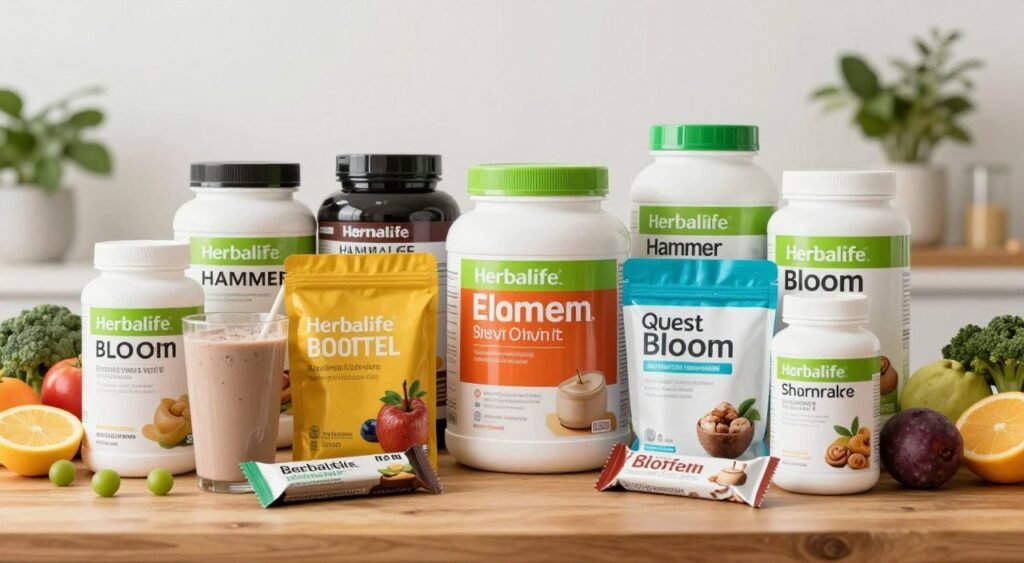

Herbalife is the meal-replacement and supplement option in this comparison, while Hammer, Bloom, and Quest serve different nutrition niches. Product purpose matters more than brand names when people compare nutrition and wellness products for weight loss, sports fueling, or everyday health.
The global weight-loss products and services market reached $353.3 billion in 2025 and is forecast to reach $556.72 billion by 2030, with a projected annual growth rate of 9.5%. That scale reflects broad demand, not proof that one brand or product works better than another. This comparison focuses on product ranges, formats, intended uses, and practical points that can help you narrow a choice.
These brands are not interchangeable. One may suit a need for meal replacements, while another may better fit endurance fueling, greens, or protein snacks. The label and the way a product fits into a person’s eating habits matter alongside its marketing claims.
Compare the specific product and intended use before treating two brands as alternatives.
Key Takeaways
- Herbalife centers on meal replacements, supplements, and distributor-based sales.
- Hammer is the closer category match for endurance fueling.
- Quest overlaps most with protein snacks and shakes.
- Bloom’s broad niche is greens and wellness products.
- Product format, intended use, and label details help distinguish options.
What Does Herbalife Nutrition Offer?
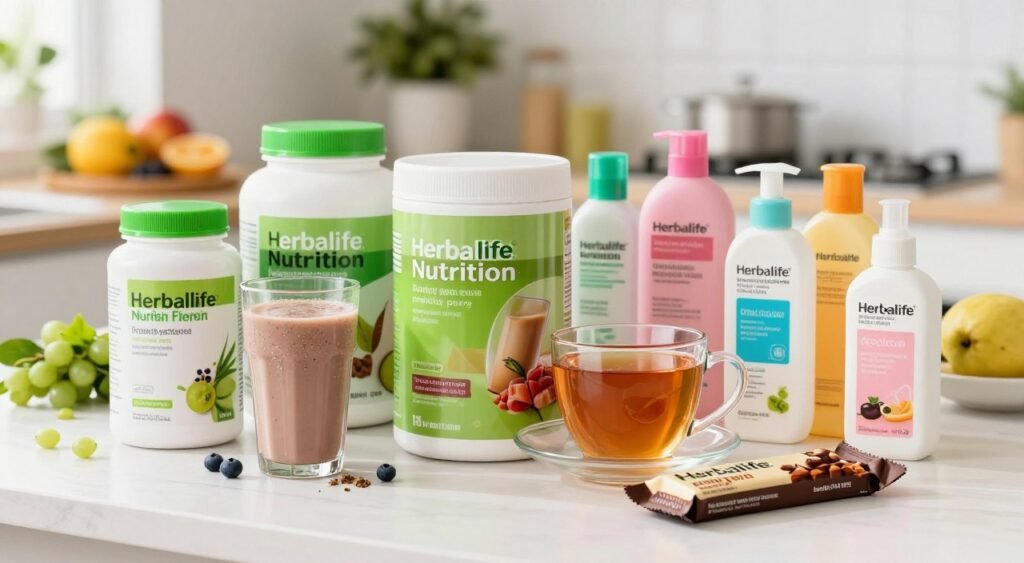
Herbalife combines nutrition and personal care products with a distributor-based direct-selling model. Its range includes weight-management products, dietary supplements, sports nutrition, and personal care products, so the brand covers more than one kind of wellness need.
Multilevel marketing (MLM) is a direct-selling business model in which independent distributors sell products and may receive compensation tied to sales and distributor activity. Herbalife distributors sell products directly to customers, including through storefronts called Nutrition Clubs.
Herbalife was founded in 1980 by Mark R. Hughes. The company reported full-year 2025 net sales of $5.0 billion, up 0.9% from 2024. Its fourth-quarter 2025 net sales were $1.3 billion, up 6.3% year over year.
Full-year net sales growth was 2.5% year over year on a constant-currency basis. These figures describe the company’s business performance, not the results a customer can expect from a product or weight-management program.
Herbalife products include Formula 1 shakes, vitamins, teas, aloe products, sports nutrition, protein bars, and personal care items. The company’s flagship meal replacement is the Formula 1 shake, but customers can also buy products outside that range.
In December 2025, Herbalife released Pro2col Beta 2.0, expanding beta access to distributors and customers in the United States, Canada, and Puerto Rico. In February 2026, Cristiano Ronaldo invested $7.5 million for a 10% equity interest in HBL Pro2col Software, LLC, and committed to provide services and sponsorship rights.
That investment concerns software, not evidence of product use or nutrition results. Keep the Pro2col software venture distinct from Herbalife’s nutrition product range. A software investment and a nutrition product serve different purposes.
Keep the Pro2col software venture distinct from Herbalife’s nutrition product range.
How Do Hammer, Herbalife, Bloom, and Quest Compare?
The closest comparison changes with the product: Quest overlaps most with protein snacks, while Hammer overlaps with endurance fueling. Category fit is more useful than comparing the brands as if they offered the same products.
Quest is the closest named comparison for protein snacks and shakes; Hammer is the closer match for endurance fueling. Herbalife spans meal replacements and supplements, while Bloom is positioned around greens and wellness products.
Hammer’s endurance-nutrition focus
Hammer is the endurance-nutrition choice in this comparison. Its category fit is sports fueling, rather than meal-replacement programs or protein-focused snack foods.
Herbalife’s meal-replacement and supplement range
Herbalife offers meal replacements, supplements, and sports nutrition. Its broader range also includes personal care products, making it less focused on one narrow food category.
Bloom’s greens and wellness products
Bloom’s comparison niche is greens and wellness products. That makes it a category-level alternative for shoppers seeking those product types, not a direct match for every shake or sports product.
Quest’s protein-focused snacks and shakes
Quest is the most direct category comparison for protein-focused snacks and shakes. A protein supplement market valued at USD 29.8 billion in 2025 is projected to reach USD 63.2 billion by 2033, with a projected annual growth rate of 10.3% from 2026 to 2033.
North America held 40.8% of global protein-supplement market revenue in 2025, and the United States held the largest country market share. Protein powder represented 48.8% of that market. North America was also the largest regional market for weight-loss products and services in 2025.
| Brand | Broad focus | Product formats | Use case |
|---|---|---|---|
| Hammer | Endurance nutrition | Sports-nutrition products | Endurance fueling |
| Herbalife | Meal replacements and supplements | Shakes and nutrition products | Meal-replacement programs and broader nutrition needs |
| Bloom | Greens and wellness | Greens and wellness products | Greens-focused product use |
| Quest | Protein-focused foods | Snacks and shakes | Protein snacks and shakes |
Market size gives context for consumer demand, not evidence that one company’s products outperform another’s. Match the comparison to the product category rather than assuming one brand competes across every use.
Which Products Does Each Brand Offer?
Herbalife spans meal replacements, supplements, sports nutrition, and personal care rather than a single product type. The range includes individual items and products used within a broader weight-management plan.
Formula 1 is the meal-replacement shake, while Formula 2 is a multivitamin. Herbalife’s other products include Herbal Tea Concentrate, Herbal Aloe, protein bars, and sports nutrition items.
Herbalife meal replacements and supplements
Formula 1 is a meal-replacement shake. Formula 2 is a multivitamin, and Formula 3 is a cell-activating supplement. These products have distinct formats and stated roles, so a customer should not treat them as interchangeable.
| Product | Product format | Stated role | Place in the broader range |
|---|---|---|---|
| Formula 1 shake | Meal-replacement shake | Meal replacement | Weight-management and nutrition range |
| Formula 2 multivitamin | Multivitamin supplement | Vitamin supplement | Dietary supplements |
| Herbal Tea Concentrate | Instant tea mix | Tea beverage | Nutrition and beverage products |
| Herbal Aloe | Aloe beverage product | Aloe product | Nutrition and beverage products |
Sports nutrition and protein snacks
Herbalife also sells sports nutrition products and protein bars. Hammer’s broad category is endurance sports nutrition, while Quest focuses on protein snacks and shakes. Bloom is associated with greens and wellness products.
Personal care and wellness products
Personal care products form another part of Herbalife’s range. They sit outside the shake and supplement categories, even though they share the company’s broader nutrition and wellness branding.
The four main range categories are:
- Meal replacements, including Formula 1 shakes.
- Dietary supplements, including Formula 2 multivitamins.
- Sports nutrition, for people seeking products in that category.
- Personal care products, separate from meal-replacement foods.
Herbalife’s weight-management plan combines meal-replacement shakes, supplements, physical activity, and behavior modification. Compare the actual format and role of each product, not just the brand’s broad wellness label.
What Is in Herbalife’s Formula 1 Shake?
Formula 1 is a soy-based meal-replacement shake, but its full ingredient list varies by flavor and version. The soy base answers the main ingredient question, but it does not describe every ingredient in every package.
Formula 1 contains protein powder, added sugars, artificial flavors, colors, and emulsifiers. The exact ingredient list depends on the flavor and preparation, so the package label is the best guide to a specific version.
Formula 1 is available in 17 flavors. That range means the ingredient list for one flavor should not be assumed to match every other flavor. A prepared shake can also differ from the powder alone when a customer adds liquid or other ingredients.
Herbalife’s wider catalog includes several product types, and there is no single ingredient shared by every product. A meal-replacement shake, multivitamin, tea mix, aloe product, and personal care item each have their own formulation.
Readers comparing protein shakes can check the ingredient order, added sugars, flavoring, and any colors or emulsifiers listed on the package. Those details can matter for allergies, dietary preferences, or a person’s taste and texture preferences.
Preparation matters as well. Mixing the powder with a different liquid or adding other ingredients changes the finished drink, even though the base product remains the same. Readers who track nutrition should use the package details for the version they actually prepare.
Read the ingredient list for the exact flavor and preparation you plan to use.
How Does Herbalife’s Weight-Management Program Work?
The weight-loss plan replaces two daily meals with shakes and leaves one meal and two snacks in the day’s pattern. The structure differs from the maintenance plan, which uses a Formula 1 shake once a day, typically at breakfast.
Herbalife describes three plan options: daily nutrition for maintenance, weight loss, and weight gain. The table summarizes the stated structure without assuming that every option suits every person.
| Plan | Stated goal | Structure described | Meal-planning support |
|---|---|---|---|
| Daily nutrition | Weight maintenance | Formula 1 once a day, typically at breakfast | Meal-builder guidance |
| Weight loss | Weight loss | Two shakes, two snacks, and one self-prepared meal daily | Meal-builder guidance for the prepared meal |
| Weight gain | Weight gain | A daily nutrition plan for weight gain | Meal-planning support is not specified here |
The weight-loss meal pattern
The weight-loss plan combines two meal-replacement shakes, two snacks, and one meal prepared by the participant each day. The meal-builder tool includes protein, vegetables, healthy carbohydrates, healthy fats, and seasonings.
That prepared meal is the part of the pattern that requires the person to plan and assemble food. The meal-builder categories give a framework, but the participant chooses the foods that fit their preferences and needs.
Maintenance and other plan goals
The maintenance plan uses Formula 1 once daily, typically at breakfast. Herbalife also describes daily nutrition for weight gain, but the specific meal pattern for that option is not detailed here.
Three practical steps can help someone review a plan before starting:
- Discuss personal goals with an independent distributor.
- Choose the plan that matches the intended goal.
- Review the meal pattern with a healthcare professional before starting.
Plan the self-prepared meal around the food groups included in Herbalife’s meal-builder guidance.
Does Herbalife Nutrition Work for Weight Loss?
Herbalife’s meal-replacement approach can support short-term weight loss when it reduces overall calorie intake, but individual results differ. The key condition is whether the plan leads to a sustained change in what a person eats.
Replacing meals can reduce calorie intake and may support short-term weight loss, but no one-month result is dependable for every user. The outcome depends on individual intake and adherence, among other personal factors.
Research has examined meal replacements in several settings. A 2015 Look AHEAD trial studied meal replacements as part of a weight-loss approach. Its focus was a broader intervention, not a guarantee for any one product user.
A 2025 clinical trial examined Herbalife meal-replacement shakes among adults with overweight or obesity. A 2020 meta-analysis covered nine randomized controlled trials of Herbalife high-protein products.
A 2019 systematic review and meta-analysis examined meal replacements paired with enhanced support. These different kinds of research can inform the general discussion, but they do not establish a fixed result for an individual using a specific program.
The search for 1-month Herbalife weight-loss results has no universal numeric answer. The named research does not establish a dependable one-month outcome for every user, and a short-term change cannot predict what happens later.
Weight can change for reasons beyond a meal plan, and short-term results may not continue if eating habits change. A person’s starting point, overall intake, and ability to follow the approach all affect the outcome.
Treat a short-term change as one measure of progress, not a forecast of long-term maintenance.
How Do Herbalife Shakes Fit With Whole-Food Meals?
A shake can make one meal convenient, but the self-prepared meal is where the program makes room for a wider mix of foods. That meal can include foods from several groups rather than relying on a packaged drink.
A plan based only on shakes and snack products can leave less room for varied whole foods. The meal-builder guidance includes protein, vegetables, healthy carbohydrates, and healthy fats.
A practical meal could pair grilled chicken or beans with vegetables, a whole-grain side, and a source of healthy fat such as avocado. That combination uses the suggested categories while leaving room to choose foods that fit a person’s preferences.
The shake offers a different kind of convenience. It can simplify a meal when time is limited, while a prepared plate lets the eater choose a wider range of ingredients and textures.
Whole foods also make it easier to vary a meal from day to day. A person might change the protein source, choose different vegetables, or switch the carbohydrate while keeping the same broad meal structure.
That flexibility matters when a program includes packaged foods. If a person relies on shakes and snack products for most eating occasions, the available variety can narrow. The self-prepared meal can help counter that pattern.
Use the meal-builder categories to keep the prepared meal varied rather than relying on packaged foods for every eating occasion.
What Should You Know About Herbalife Tea and Supplements?
Herbal Tea Concentrate and Total Control are separate caffeine-containing products, while the other supplements serve different stated roles. The distinction matters because their formats, ingredients, and intended uses are not the same.
Herbal Tea Concentrate provides 85 milligrams of caffeine per serving, and Total Control contains 82 milligrams. A customer comparing caffeine intake should count both products alongside other sources.
Tea and caffeine-containing products
Herbal Tea Concentrate is an instant tea mix. Total Control is a separate product, not another name for the tea. Their caffeine amounts are close, but their labels and product purposes should be reviewed separately.
Other supplements and their stated purposes
Formula 2 is a multivitamin. Formula 3 contains alpha-lipoic acid, aloe vera, pomegranate, rhodiola, pine bark, and resveratrol. Cell-U-Loss contains electrolytes and botanical ingredients, including corn silk, parsley, dandelion, and asparagus root.
| Product | Format or ingredients | Stated purpose |
|---|---|---|
| Herbal Tea Concentrate | Instant tea mix, 85 milligrams caffeine per serving | Tea beverage |
| Total Control | Supplement, 82 milligrams caffeine | Product associated with weight-management claims |
| Formula 2 | Multivitamin | Vitamin supplement |
| Formula 3 | Alpha-lipoic acid and botanical ingredients | Cell-activating supplement |
| Cell-U-Loss | Electrolytes and botanical ingredients | Supplement for fluid balance |
Product descriptions and stated purposes do not establish that a supplement will cause weight loss, change metabolism, or produce another bodily effect. Those claims should be judged against product-specific evidence and the package label.
Botanical ingredients can appear in products with different stated roles, so a familiar plant name does not show what a product will do. The full formula and serving directions provide more useful details than a broad category name.
Check the current label for ingredients and caffeine in the particular product you are considering.
What Happens at Herbalife Nutrition Clubs?
An Herbalife Nutrition Club is a distributor-owned storefront centered on Herbalife shakes and teas. The setting brings the products into a face-to-face environment where customers can order drinks and interact with a local operator.
Herbalife has reported 65,000 Nutrition Clubs globally. These storefronts may offer shakes, teas, toppings, and protein-based baked goods.
A club can resemble a smoothie shop, but its offerings are Herbalife products. That distinction helps customers understand the relationship between the storefront, the products, and the distributor who owns the location.
Distributors may use a club to sell products and build community around them. The in-person setting can make it easier to ask how a drink is prepared or which options are available that day.
The menu can include additions such as toppings or protein-based baked goods. Those choices affect what ends up in a drink or snack, so the product name alone may not describe the finished order.
A club visit is also different from buying a sealed package for home use. The drink is prepared at the storefront, and the customer can ask about the ingredients and preparation before ordering.
Ask what the drink contains and how it is prepared before choosing a club offering.
How Do You Buy Herbalife Products?
Herbalife products are sold through independent distributors, and the company website can connect customers with one. The purchase route is part of its direct-selling model rather than a standard company-run retail checkout.
Use the distributor connection to ask about a specific product, not to assume every item fits every need. The product label and intended use help a customer compare options before ordering.
Four steps can make that comparison more practical:
- Identify the product and the reason for considering it.
- Review the current package label for the specific item.
- Compare the product format with the intended use.
- Use Herbalife’s website to connect with an independent distributor.
A customer looking for an Herbalife Nutrition shop should know that the company’s website provides a way to connect with an independent distributor. That route can help someone locate a seller and ask product-specific questions.
Keep the discussion focused on the product being considered. A customer interested in a shake, tea, or supplement does not need to treat a product purchase as a decision to join the company’s business opportunity.
It can help to name the format before contacting a seller. A meal-replacement shake, multivitamin, tea mix, and personal care item answer different needs, even when they come from the same company.
Compare the label and intended use of the specific product before placing an order.
What Are Herbalife Nutrition Side Effects and Safety Concerns?
Published reports have raised liver-injury concerns for some Herbalife product users, so supplement use deserves individualized review. The concern is specific to reported cases and does not mean every user will experience harm.
People with kidney disease should ask a healthcare professional whether a proposed plan’s protein intake and supplements suit their condition. The right advice depends on the person’s health and the products involved.
Reports of liver injury
Published reports have described liver injury in people who used Herbalife products. A 2018 overview and a 2020 study discuss reported cases of hepatotoxicity, a term for harm to the liver.
Published assessments have differed about whether Herbalife products caused the reported injuries. Some weight-loss supplements contain botanical ingredients, and a product’s ingredients may matter when a clinician reviews a possible reaction.
These reports do not show that every product user will develop liver damage. They do give people a reason to take new symptoms seriously and to discuss supplement use with a healthcare professional.
When to seek individualized health guidance
Three groups should seek individualized advice before using the program:
- People with a medical condition.
- People taking medication.
- People who are pregnant or breastfeeding.
The question “Is Herbalife safe for kidneys?” cannot be answered the same way for everyone. A person with kidney disease should review the protein intake and supplements in the proposed plan with a healthcare professional.
Anyone with kidney disease should review the specific products and dietary plan with their healthcare professional before use.
How Does Herbalife Test Its Products?
Herbalife says its product checks combine internal testing, third-party certification, and post-market safety monitoring. These are separate activities, each with a different role in the company’s quality process.
The company says its global post-market safety surveillance system operates across more than 90 markets. That system monitors product safety after products reach customers.
Internal product testing is one part of the process. Herbalife says it tests products to check whether they meet regulatory guidelines. This is a company quality step, not a measure of how a product will affect every person.
Third-party certification is a separate check performed by outside certifying organizations. Herbalife says those organizations help verify compliance with regulatory guidelines.
Post-market safety surveillance happens after products are in use. A global system can collect and review safety information across markets where products are sold.
These steps serve different purposes: testing checks products, third-party certification adds an outside review, and surveillance monitors safety after sale. None can predict an individual health outcome or replace personal medical guidance.
Use these company processes as product-quality context alongside the label and personal medical guidance.
What Does Herbalife’s Business Model and FTC History Mean?
Herbalife’s distributor model and the FTC settlement are relevant to understanding how products are sold and how U.S. sales practices changed. The customer question is how the sales structure works, not whether a product’s claims are automatically proven.
The 2016 settlement required changes to Herbalife’s U.S. business practices, including tying distributor rewards to verifiable sales and outside monitoring for a defined period.
Distributor sales and customer relationships
Herbalife operates through multilevel marketing and direct selling. Independent distributors sell products to customers, and compensation structures can involve both retail sales and distributor activity.
That structure can create customer relationships through direct contact, local storefronts, or personal recommendations. A customer evaluating a nutrition product can keep the purchase decision separate from any interest in selling products.
The FTC settlement and changes to the U.S. model
The Federal Trade Commission reached a settlement with Herbalife in 2016. The settlement required changes to the company’s U.S. business practices and outside monitoring for a defined period.
The required changes included tying distributor rewards to verifiable sales. This requirement addressed how rewards were connected to sales activity; it does not by itself establish a nutrition product’s effectiveness.
The settlement is useful context for understanding the company’s U.S. sales model. It should not be treated as a claim that every distributor or customer had the same experience.
Separate the decision to buy a nutrition product from the decision to pursue a distributor business opportunity.
How Much Does Herbalife Cost?
An Herbalife program’s total depends on the products and supplements selected for that plan. A single product has a different cost from a multi-product program that includes several items.
The total changes with the products included and how often each is used according to its label. A program does not have one fixed cost for every customer.
A customer comparing costs can start by listing the products required for the intended plan. A shake by itself is not the same purchase as a collection of shakes, supplements, and other items.
Next, note how often each product is used according to its label. A product used more often will affect the total differently from one used occasionally. The amount needed also depends on the selected plan and product set.
Then compare the complete set with the intended use. This makes it easier to distinguish the cost of one item from the cost of following a multi-product routine.
Herbalife products are purchased through independent distributors. The choice of products and dietary supplements determines what a customer needs to include in a cost comparison.
Compare the complete product set you intend to use rather than judging a program by one item.
How Do You Choose Between Hammer, Herbalife, Bloom, and Quest?
Choose the brand by the job you want the product to do, then compare specific products within that category. The category comes first: endurance fueling, meal replacements, greens, or protein snacks point toward different options.
Hammer matches endurance fueling, Herbalife matches meal-replacement programs and broader supplements, Bloom matches greens and wellness products, and Quest matches protein snacks and shakes.
Match the brand to the product category
Hammer is the closest category match for endurance nutrition. Herbalife offers meal replacements, dietary supplements, sports nutrition, and personal care products. Bloom is positioned around greens and wellness, while Quest focuses on protein snacks and shakes.
Those broad categories help narrow the search, but they do not prove that one product will work better for a particular person. A brand name alone does not describe ingredients, serving format, or results.
Compare labels, use, and purchase format
When categories overlap, compare individual labels. Check whether the product format fits the intended use, then review ingredient and nutrition details that matter to the buyer.
Use this four-point checklist:
- Intended use, such as endurance fueling or a meal replacement.
- Product format, such as a shake, snack, greens product, or supplement.
- Ingredient and nutrition label for the specific product.
- Purchase or use context, including how the product will fit a routine.
Someone seeking protein may find overlap between shakes and snacks, while a shopper focused on sports fueling may need a narrower comparison. For personal care, Herbalife is the brand in this group with that broader product category.
Narrow the choice to a product format and intended use before comparing individual labels.
Conclusion
Herbalife stands out in this comparison for its meal-replacement program and distributor-based sales, while the other brands occupy different nutrition niches. The clearest distinction is the product category, not a general claim that one company is best.
Hammer aligns with endurance fueling, Bloom with greens and wellness, and Quest with protein snacks and shakes. Herbalife offers a broader range that includes meal replacements and supplements.
Brand-level assumptions cannot replace a product label or a clear idea of intended use. A specific shake, snack, supplement, or sports product deserves its own comparison.
Choose a specific product category, review the label, and discuss health questions with a qualified healthcare professional when they apply.